Cats Herd You

Laugh. Learn. Love cats.

  • Home
  • Safety
  • Wellness
  • Rescue
  • Reviews
  • Life With Cats
  • About
  • Media Friendly
  • Contact
You are here: Home / Archives for Health

Ways to Pill a Cat Roundup

Pierre: Did someone say give the cat a pill? 

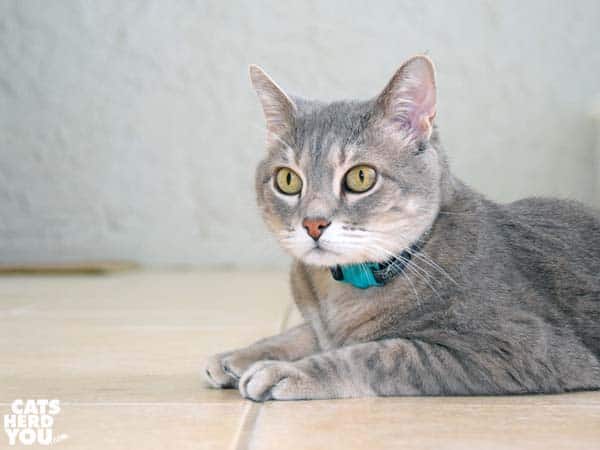
gray tabby cat with skeptical facial expresison

He even looks skeptical at the thought of getting a pill, doesn’t he? I had that same look on my face last week when the vet told me she was prescribing Pierre a ten-day course of pills.

I have given thousands of pills to cats. It was so easy that I once gave a thyroid pill to the wrong cat because he was so placid about it. (Yes, that was pretty mortifying afterward, but no harm was done from one errant pill.) So it’s pretty embarrassing to admit that I now share a home with cats who I dread having to give pills. I have become that veterinary client who vets assume won’t comply with the prescribed course of treatment.

The main problem is that Pierre doesn’t like to be restrained in any way, and he starts growling immediately when you do. It escalates from there. His idea of being held or carried is to climb up onto your shoulders when you pick him up.

gray cat sits on human's shoulders while she takes photo with camera

It’s really cute to walk around with a cat on your shoulders, but you can’t give him a pill up there.

Ways to Pill a Cat

So what are your options for pilling a reluctant cat? I turned to YouTube, the treasure trove of how-to videos, for suggestions.

Just Give The Pill

The vets and technicians in videos always make it look easy. I liked this demonstration because the cat didn’t look quite as compliant about the whole process as some of the other videos, even though it was demonstrated by a veterinarian. She even drops the pill the first time. Just goes to show that it isn’t entirely easy for the professionals, either.

Make a Kitty Burrito with a Towel

You can use a towel to create a tidy kitty burrito that helps hold your cat in place. This video shows you to make a burrito where the open ends of the towel all end up in the same place so you can hold it with one hand while pilling your cat with the other.

I tried to give Pierre a pill the old-fashioned way, and I couldn’t do it. The growling, hissing, spitting, and struggling left me bleeding and frustrated, but after he walked into the next room and spit the pill out, I decided that wasn’t going to work.

There’s actually a bag you can use to serve as as a kitty burrito, too, which is a lot more sturdy and doesn’t require a hand to hold it shut. I was pressed for time and didn’t want to put Pierre in the bag without having a little longer to ease him in, so I reserved that as a fallback for later in the day if all else failed.

Use a Pill Popper

If you think you can hold your cat, but you are afraid of putting your fingers inbetween kitty’s teeth, they make pill poppers (also called pill guns), that help put the pill in the right place in the cat’s mouth without endangering your fingers.

This might have solved the problem with my not getting the pill in the right spot for Pierre to swallow it. I ransacked my house and couldn’t find my pill popper when I needed it, so my bonus tip for this is to not just make a cat health kit, but actually put your relevant gadgets and things in it. I did find my pill popper, five days after I needed it, so this was a fail on my part, not Pierre’s!

Hide the Pill in Food

Mashing up a pill and hiding it in food is an option if you know you can get your cat to eat the whole thing. As Dr. Susan Little said, “Yes, you can put the meds into the food if you don’t mind the meds getting into the cat.” Pierre isn’t a very food-motivated cat at the best of times, and he had gone to the vet for poor appetite, which made this a bad option for him.

This video includes an interesting method in which you administer the meds and food directly to the cat.

I actually like this idea a lot, but as soon as I pick up Pierre, he climbs up onto my shoulders, so that won’t let me administer the food the way the video demonstrates.

Hide the Pill in a Treat

You can get special treats that are the consistency of cookie dough but are apparently full of some kind of cat crack. This works if your cat is food-motivated enough for the treats or if whatever they put in them is enticing enough. Especially bitter pills may be hard to hide even in these purpose-made pill treats or pastes.

The nice, peaceful music in this video made me smile, because that’s exactly how I hoped this method would work as opposed to the struggling, growling, and scratching that happened when I tried earlier.

Pierre’s favorite flavor of anything is fish flavor, and luckily, they make salmon-flavored pill pockets. The pills he needed to take were mostly coated, so I thought it would keep the pill flavor contained so he would eat it.

How Did It Work?

I three pill pockets from the package and hid the pill inside one of them, being sure to mash the pill around it so that it was thoroughly surrounded by the soft treat.  I gave Pierre the first one empty and he ate it right up. Then I gave him the second one and held my breath. He ate that, too. I’m pretty sure I heard the Hallejuah Chorus playing in the distance at that moment, the relief was so strong that it worked! Pierre got one more treat without a pill to be sure that he swallowed everything, and pill time was over.

I know that there are other options for us, including getting the medication compounded into a liquid form, getting it compounded into treats itself, or for some medications, purchasing transdermal gel that gives the medication through the skin. But I thankfully don’t have to go any of those routes to get medication into Pierre. For now, at least, he is eating his daily pills and is happy about it. Hopefully he won’t be in on this secret for a long, long time.

Share Share on email
Email
Share on twitter
Twitter
Share on facebook
Facebook
Share on pinterest
Pinterest
Share on google
Google
Share on tumblr
Tumblr
Share on linkedin
Linkedin

April 11, 2016 Filed Under: Health 22 Comments

Raw Cat Food: Not as Expensive as You Think

One of the questions I get asked when I mention making raw food for my cats is, “Wow, isn’t that expensive?” When I posted about how I make raw cat food for Newton and Ashton, APB asked this much more politely, “Have you figured out what your food costs, per pound?” in the post comments.

The short answers are: it’s actually not expensive at all, and the food cost per pound varies a little depending on your ingredient cost. I sat down with the actual receipts from the last batch of food that you saw photos of my making to calculate the exact cost. Surprisingly, it costs much more to feed Pierre, who is not interested in raw food thankyouverymuch, than it does to feed raw to both Newton and Ashton combined.

How Much Raw Cat Food Costs to Make

I’m about to start tossing numbers around again, so if you are as allergic to math as I am, don’t worry, I’ll include the bottom line and not just all these numbers.

How much does raw cat food really cost?

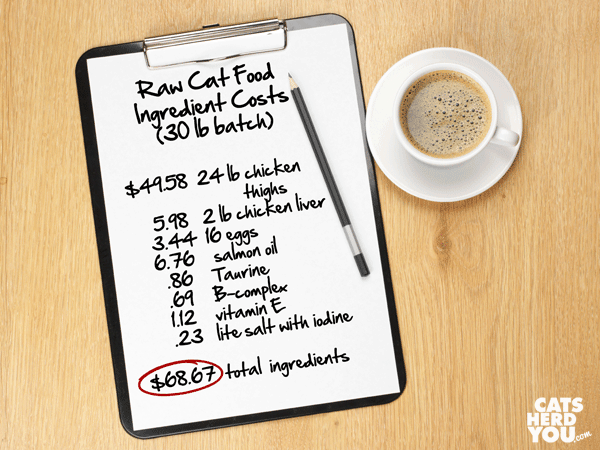
The 30 lb batch of food I described in my previous post had a total ingredient cost of $68.67.

raw cat food ingredient costs

That total includes buying the chicken, chicken liver, and eggs at Whole Foods, so I’m sure I could have sourced them less expensively. I wanted to be sure the chicken wasn’t injected with extra saline or dunked in a chlorinated water bath, so I chose to buy the chicken at Whole Foods where I knew I could get air chilled chicken. I am still looking into other sources, so I might be able to get that cost down a little bit.

The 30 lb of food in a batch are separated out into 202 meals. (Ashton eats 2 oz meals and Newton eats 2.75 oz meals, for an average of 2.38 oz.)

meals per raw cat food batch

Taking the total cost of a batch and dividing it by the number of meals, that last batch of raw food I made for the cats cost $.34 per meal. Yes, you read that right, my cats are eating whole meat meals from Whole Foods at $.34 per serving.

Pierre, who still turns his nose up at raw, currently eats the canned food that Ashton and Newton used to also eat, which costs $1.70 per can. (Yes, we’re looking for a new food, but this is what he’s eating now.) A meal is half a can of food, making it cost $.85.

cost per meal for homemade ground raw food vs commercial canned food

So the canned food is $.85 per serving and the raw food, at $.34 per serving, is less than half the cost. I’m saving $2 a day for two cats to eat fresh instead of canned canned food. Not bad savings!

What About that Grinder?

I can almost hear someone asking about my grinder. It’s true, I bought my grinder specifically for making cat food, so it’s fair to ask how it factors into the equation.

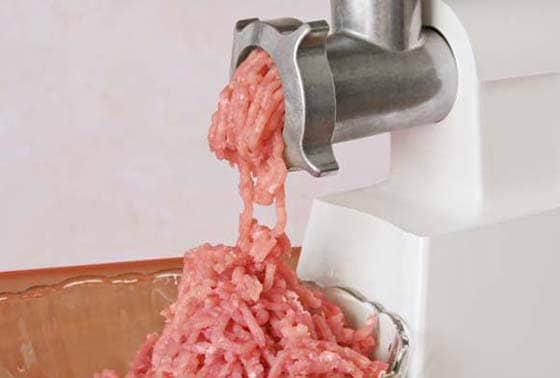
meat grinder

Image credit: depositphotos/ptasha

Well, if I’m saving $2 a day, let’s apply that toward the cost of a grinder. If I bought a Tasin TS-108 ($150), which is what many people use for grinding meat for cat food, it would take 74 days to pay for itself from the savings over canned food.

I went all out and bought a Weston #12 grinder, which was more costly ($457). It will be 225 days until the savings over the cost of canned food pays for the grinder. If it hadn’t been for being able to project it paying for itself in well under a year, it would have been a lot harder for me to justify the higher-horsepower grinder!

It’s Not All About Saving Money

So that’s the long answer about how much it costs to to make your own raw cat food. The numbers assume you’re going to feed the same food day after day, week after week. Some cats do better with that than others! Ashton is starting to show signs of boredom with that, so I’m going to start rotating some other foods into their raw diet, which will no doubt nudge these numbers one direction or another. Happy cats at mealtime make happy humans.

I also wanted to note that I didn’t start down the road to feeding raw because it was less expensive. If it was all about the cost, I could have just fed my cats grocery store kibble. I actually started because Pierre was having so much trouble keeping his commercial canned food down for a while that I wanted him to benefit from something more digestible.

Of course, cats being cats, Ashton and Newton took to raw, and Pierre is the only one who won’t touch it. His stomach is much better on a different canned food he is eating now, and who knows, maybe someday he will be curious enough about Ashton’s bowl that he’ll give it a try, too. Until then, I’m paying more to feed him canned food than I am to feed the other two cats raw food, and that’s OK, too. It’s really about keeping your cat  healthy and happy, and even among my cats, that isn’t a one-size-fits-all thing!

making raw cat food: not as expensive as you probably think

Share Share on email
Email
Share on twitter
Twitter
Share on facebook
Facebook
Share on pinterest
Pinterest
Share on google
Google
Share on tumblr
Tumblr
Share on linkedin
Linkedin

April 4, 2016 Filed Under: Health 26 Comments

Senior Cats Need More Protein

I don’t like to think about Pierre as a senior cat, but he is. He’s 11 now, and when he was at the vet this past week, the vet confirmed what I had suspected: he is slowly losing weight on the same diet where that had previously sustained him.

gray tabby cat is not looking at the camera

Why could this be? It’s good, high quality food, and that hasn’t changed. The thing that is changing is Pierre’s aging body.

Starting around age 10 or 12, a healthy cat’s aging body becomes less able to digest the protein in the food he eats. Pierre is eating the same food in the same amount he did, but he’s not getting as much of the protein he needs out of it.

Cats Need Protein for Energy

Animals eat food so they can convert it to energy to fuel their bodies. As obligate carnivores, cats need more protein in their diet compared to omnivores like humans. Cats don’t need carbohydrates, and their systems aren’t adapted to process carbs. They convert the digestible protein in their diet into energy to fuel their daily activities.

Not all protein is created equal. Although plant matter may contain protein, as carnivores, a cat’s system is designed to convert animal protein into energy. Even the wrong kind of animal protein isn’t digestible. For example, feathers are made of protein, but they aren’t digestible.

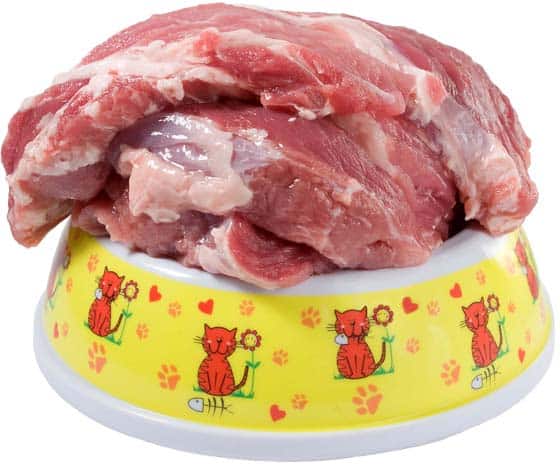
cat bowl piled high with meat

As carnivores, cats need digestible protien. Photo courtesy depositphotos/janzwolinski

An interesting study about middle-aged cats given a selection of foods and allowed to choose their own proportion of protein, fat, and carbohydrates to make up their daily energy requirements, the cats chose a diet 52% (26 grams) protein. The average body weight of cats in the study was 4.9 kg (10.8 lb for us Americans), which means the cats in this research colony chose to eat 5.3 grams of protein per kilogram of body weight a day.

Another study compared cats eating diets that were either low or high in proteins. Cats fed a 30% protein diet lost about 1.2% of their lean body mass while cats fed a 53% protein diet gained 4.2 lean body mass. The researches in this study concluded that cats needed to eat 5.28 grams of protein per kilogram of body weight a day. Those cats allowed to select the amount of protein they ate in their diet in the other study apparently had already figured that out!

Energy Requirements during Middle Age

We know from the epidemic of feline obesity that middle-aged cats can easily gain weight. This happens partly because their metabolism slows during middle age, a phenomenon that many humans can relate to. Both cats and humans can get “middle age spread” when their metabolism isn’t what it used to be when they were kittens.

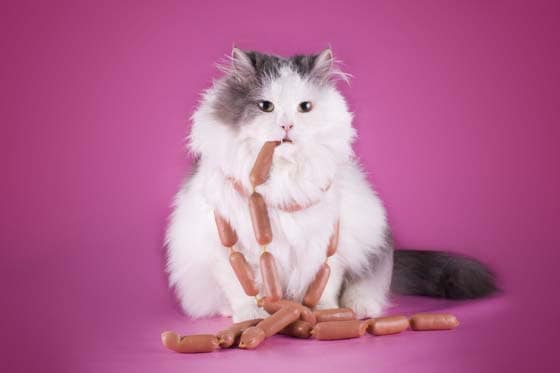
fat cat eating sausages

When a cat reaches middle age, their metabolism slows, and they can’t burn off the calories like they used to. Image courtesy depositphotos/kuban_girl

There is a lot of attention currently being focused on the feline obesity epidemic, and it’s easy to breathe a sigh of relief when your older kitty starts to finally lose some of that weight that the vet has been telling you needs come off of him. But that could actually be a sign that your cat is leaving middle age and becoming a senior.

Energy Requirements beyond Middle Age

When cats get to 10 or 12 years old, their bodies start to change. Even healthy senior cats need more calories to convert into the energy their bodies need because they no longer absorb and metabolize the proteins they eat as efficiently as they used to.

A 12 year old cat only digests about 75% of the protein he eats, so he needs even more protein in his diet to make up for it, unless you can convince him to eat 25% more. This inability to digest the protein in the cat’s diet actually increases as he gets even more geriatric. At some point, you can’t keep feeding your kitty more and more of the same food to make up for his inability to absorb nutrients like he used to. Instead, your cat needs a higher amount of digestible protein in the food he eats.

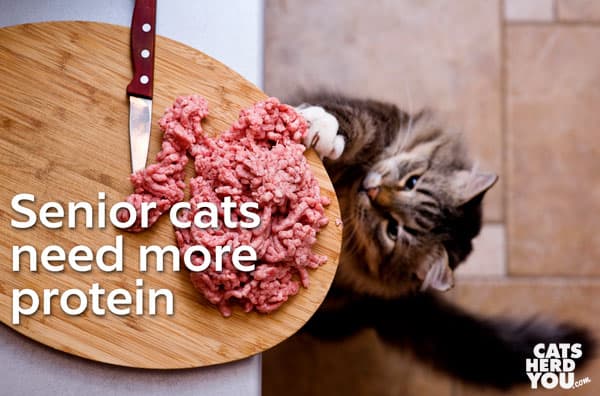
senior cats need more protein / cat stealing meat

When your cat doesn’t get enough protein to support his energy needs, he uses his body’s energy reserves. When the fat is gone, he begins to use the energy reserves in his own muscles. This is often referred to as called muscle wasting or sarcopenia. Muscle wasting is seen in a lot of elderly cats as well as elderly humans.

To prevent sarcopenia from aging, a cat needs additional calories and protein. After age 12, this need increases 10-60%, or at least 6.0 – 8.5 grams per kilogram of body weight a day.

How Much Protein is In My Cat’s Food?

Armed with this information, I went to look at Pierre’s cat food. He eats a quality food that has served him well for a long time, and since he’s a picky eater, I’m grateful that he likes the stuff.

It was time to bust out some math and figure out how many grams of protein Pierre is getting per kilogram every day to see if that might be an issue. You can follow along with your own cat food, if you want.

The Math

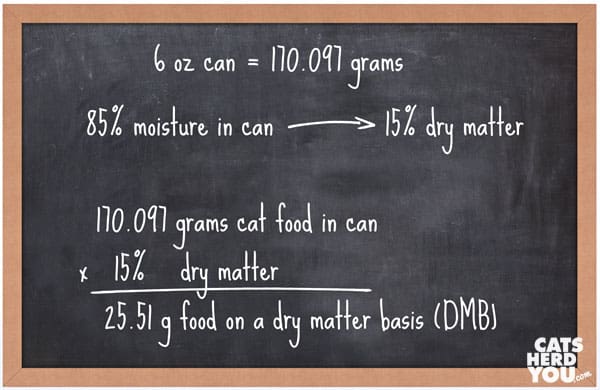
Pierre eats from a 6 oz can of food. 6 oz is the same as 170.097 grams.

To calculate things on a dry matter basis, I looked at the back of the can. 85% of the weight of his food is moisture. That means only 15% of the contents is dry matter.

If I multiply the 170.097 grams of food weight by the 15% dry matter percentage, I discover that the can contains 25.51 grams of food on a dry matter basis.

Calculating the protien in cat food example 1

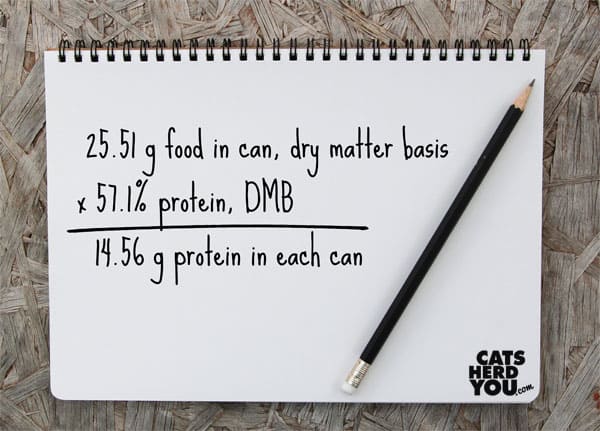
Next I went to the cat food manufacturer’s web site and looked up the percent of protein in the food by dry matter basis. Be sure you’re getting the dry matter basis number for this step! You are more likely to find an “as fed” percentage, and that isn’t the value you’re looking for. Pierre’s food is 57.1% protein on a dry matter basis. That sounded pretty promising.

I multiplied the number I calculated for grams of food in the can on a dry matter basis (25.51) by this protein percentage (57.1%) to find that there are 14.56 grams of protein in each can.

Calculating the protien in cat food example 2

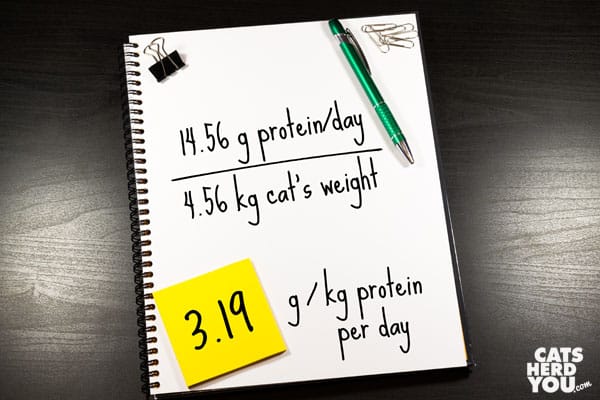
Now that I’ve calculated how much protein there is in a can, I need to figure out how much Pierre is eating per kilogram of his body weight. He eats one can a day, so we can use the protein value we already calculated for one can of his food. And at the vet last week, he weighed 10.1 lb, which converts to 4.56 kilograms.

If I divide his 14.56 grams of daily protein intake by his 4.56 kg weight, I find that he is eating 3.19 grams per kilogram per day of protein an average middle aged cat needs. It’s even further below the 6+ grams seniors who have started to have difficulty absorbing nutrients from protein need.

Calculating the protien in cat food example 3

I just discovered I’m looking for a new cat food for Pierre!

(I originally figured this all out on a spreadsheet that calculated these numbers to a lot more decimal places, but I’m breaking them down here with only a few decimal places. If you check my math and it is off by a rounding error, that’s the reason.)

What About Your Skinny, Old Cat?

As you read above, Pierre is under a veterinarian’s care, and his vet and I will be discussing this information soon. There are other medical reasons that your cat could be losing weight in his senior years, such as hyperthyroidism, diabetes, or kidney disease, so it’s important that your vet make sure your kitty is healthy before making any changes to your cat’s diet, including increasing the protein in his food.


References and further reading

Journal of Experimental Biology, Geometric analysis of macronutrient selection in the adult domestic cat, Felis catus
Nestle Companion Animal Summit Proceedings, Focus on Gerontology 2010, Dietary Protein Consumption in the Healthy Aging Companion Animal
Journal of Nutrition, High Protein Intake Affects Lean Body Mass but Not Energy Expenditure in Nonobese Neutered Cats
Insights into Veterinary Endcrinology, Optimal Protein Requirements for Older Cats and Cats with Hyperthyroidism

Share Share on email
Email
Share on twitter
Twitter
Share on facebook
Facebook
Share on pinterest
Pinterest
Share on google
Google
Share on tumblr
Tumblr
Share on linkedin
Linkedin

March 28, 2016 Filed Under: Health Tagged With: Pierre 31 Comments

Saving Money on Your Cat’s Prescriptions

I’m always surprised when people say they don’t know that they can save money on their cat’s prescriptions by filling them at a pharmacy other than their veterinarian. I have used human pharmacies for some cat medications for over ten years. It’s not without its gotchas, though.

saving money on prescription medications for your cat

Your Cat’s Prescription Medications

A lot of the medications that your cat takes aren’t species-specific. They may be the same drugs that your neighbor’s dog takes. Or the same drug that your grandmother takes. Of course, your cat and your grandma don’t take the same dose of the medication. Their metabolism is different, and your cat can encounter entirely different drug interactions than your grandmother, too.

This means that those prescription medications are available outside your veterinarian’s office, and they may be less expensive there. The first thing to consider when looking at cost is that they may not be less expensive elsewhere. Don’t forget that your veterinarian is your partner in your cat’s health, and your vet may offer to match the price you get elsewhere. My vet price matches prescriptions from other sources whenever he can, so don’t forget to your vet if they can, too.

black cat on sofa back

Talia needed methimazole on an ongoing basis for her hyperthyroidism

Many years ago, when Talia was prescribed methimazole for Talia’s hyperthyroidism, I learned that methizamole was a generic drug commonly used in humans. Thanks to Christie Keith at the previous incarnation of the PetConnection site, I had heard about pharmacy discount cards discounting pet medications, so I did a little research. Sure enough, the medication that was going to cost $360 a year from my vet’s office cost $80 a year through the Walgreens pharmacy club. My vet admitted he couldn’t match that price, so I paid $20 to sign her up. Talia got a discount card with her name on it, and I saved $260 a year, which I could put toward her vet visits.

Other Places to Check for Discounts

Your local pharmacy isn’t the only place you might be able to get discounted prescription drugs for your cat. Big box store and grocery chain pharmacies also have low priced and even free drugs for certain, common pharmaceuticals. These things are good to know not only for your cat, but for you, too!

pharmacy within neon sign

At the time I started getting Talia’s methimazole through her very own prescription club card, getting medication for your cats at the human pharmacy was still fairly new. I’m lucky that it was not as unusual where I live than it was other places since there is a nearby zoological park that used the same pharmacy I did. The first time I took advantage of one of the $4 antibiotics from my local grocery store, the pharmacist thought it was really funny he was filling a prescription for a cat. These days, it’s not so unusual, and pharmacists don’t treat it like a novelty.

What to Watch Out For

Whether you’re getting your cat’s prescription filled at your local drug store or local grocery’s pharmacy, there are a few things to watch out for.

Make Sure You Get the Correct Prescription

cat with pil bottle on his headMake sure you know what the prescription is that you are asking to have filled so you can double-check you got the correct one when you pick it up. If your memory is as inaccurate as mine, you can take a photo with your smartphone of the prescription before you hand it over to the pharmacist so that you can refer to it later.

There have been reported issues with well-intended pharmacists changing pet prescriptions without checking with the veterinarian. A pharmacist, not familiar with the difference between your cat’s metabolism and your own, could think that a dosage is a typographical error. Your pharmacist might also not know that certain medications that may be interchangeable for humans aren’t interchangeable for your cat.

Pharmacy schools are starting to recognize this is a problem, and some of them are partnering with veterinary schools to offer a class for pharmacists about veterinary drugs.  There are many pharmacists who already graduated and couldn’t take advantage of these classes, so it’s best to double-check that the dispensed drugs match what was prescribed.

Splitting Pills

A human pharmacy probably won’t carry the small-dose pills that your vet does. This means you could have to cut pills in order to create the correct dosage. Ask your veterinarian to be sure sure the pills prescribed are safe to cut. Some coated pills are intended never to be cut and may not release their dosage properly if they are split.

You can use a pill splitter to cut pills, although oddly-shaped pills don’t always work well in them. I have a miniature cleaver that I used to keep extra-sharp and use exclusively for splitting pills. When I had a geriatric cat taking several split pills at a time, I bought empty gelatin capsules and put the partial pills inside so that I only had to administer one pill in a sitting. The gelatin capsules are also useful for administering medication when one half of the pill shatters when you split it. You can even get chicken flavored gelatin capsules for cats, but I didn’t find them any more palatable for cats than my the plain ones.

Ask whether it's safe to split a pill

Double-Check Doses

Not only can the pharmacist possibly dispense the wrong dose, but one of the things I discovered the hard way was that having to split pills could lead to mistakes on my part.  At one point, after a dosage change, I miscalculated the fraction of a methimazole pill Talia needed and had her on far too high a dose for about a month. I took her in for a vet visit because she wasn’t doing well, and we realized she had been suffering from low thyroid because my math was bad. I felt terrible! She didn’t suffer any long-term ill effects from my messing up her dose, but it was a big warning to me to triple-check any fractional pills for dose accuracy.

With a little extra care, you can save money on your cat’s prescriptions with the help of human pharmacies.


Photos from flickr creative commons courtesy Mike Mozart, Raymond Johnston, Derek Gavey

Share Share on email
Email
Share on twitter
Twitter
Share on facebook
Facebook
Share on pinterest
Pinterest
Share on google
Google
Share on tumblr
Tumblr
Share on linkedin
Linkedin

February 15, 2016 Filed Under: Health 19 Comments

  • « Previous Page
  • 1
  • …
  • 7
  • 8
  • 9
  • 10
  • 11
  • …
  • 18
  • Next Page »

Read Ashton’s Story in Rescued, Volume 2

These pawtographed books support Candy's Cats, who work tirelessly to find homes for cats in Florida.

Rescued, Volume 2: The Healing Stories of 12 Cats, Through Their Eyes. Proceeds from authographed copies benefit Candy's Cats.


Outside the US, contact us for shipping to your location.

Read Us by Email

Don't miss a thing! Cats delivered to your email.

Privacy Policy


Archives

All Rights Reserved

Articles and images on this site may not be reproduced in whole or in part without written consent. Please contact me if you are interested in reprinting or in having me write something unique for you.

Disclaimer

There are no veterinarians here. All health-related posts are the result of research and observation, but educational information is not a substitute for visiting your veterinarian. Do not self-diagnose your cat. For more information, see our disclaimer.

Policies

Disclosure Statement
Privacy Policy
Commenting Policy

Copyright © 2026 · Sometimes Cats Herd You · All Rights Reserved