Cats Herd You

Laugh. Learn. Love cats.

  • Home
  • Safety
  • Wellness
  • Rescue
  • Reviews
  • Life With Cats
  • About
  • Media Friendly
  • Contact
You are here: Home / Archives for Health

Research Exploring Cat Ownership and Depression Makes Surprising Discovery

For years there has been a growing body of research linking cat ownership and depression, especially in women. A number of studies have looked at his from different angles, trying to determine the actual cause of this, and a new study may have come across an unexpected cause: Bartonella bacteria.

Previous Research

Data analysis of patient records for 1.3 million patients previously discovered a statistical association between cat bites and human depression. That study’s authors suggested that the women could be infected with Toxoplasmosa gondii, which made them depressed. The researchers did not suggest that the cat bites were necessarily the cause of the Toxoplasmosa infection, but it was being noticed as a common characteristic of the depressed women who all had cats.
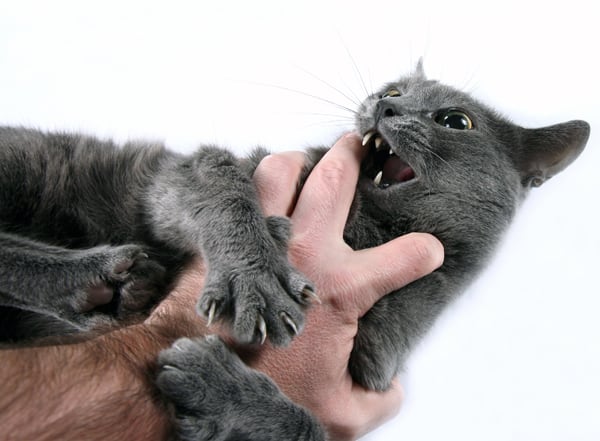
gray cat bites a human hand

Previous research had already linked depression and suicide attempts to the Toxoplasmosis infection. One theory is this happens that when humans are infected with Toxoplasmosa, the immune system kicks in to try to ward off the attacker by producing molecules called cytokines that tell your immune cells to get to work. High levels of cytokines have been linked to both depression and suicide attempts.

New Research on Animal-Inflicted Injuries and Depression

A pair of researchers in the Czech Republic wanted to take a closer look at the correlation between animal-inflicted injuries and depression. Study subjects filled out a questionnaire where they identified how closely they lived with dogs or cats during their whole lives and whether they had been bitten or scratched by a dog or cat.

cat biting string

The research subjects also took the Beck Depression Inventory, a standard diagnostic tool to measure the severity of depression, and they also identified whether they had ever been diagnosed as infected with Toxoplasmosa gondii.

Detailed analysis of the survey results found that neither cat bites nor Toxoplasmosa were the primary correlation to depression in women. Instead, depression occurred more often in women who had been scratched by cats.

cat claws

This led the researchers question whether something other than Toxoplasmosa might be triggering depression in women. The study’s authors propose that the Bartonella bacteria, which is responsible for cat-scratch disease, might actually be the cause.

Cat-scratch disease, also known as cat-scratch fever, is carried by fleas and ticks and transmitted to humans primarily by scratches from cats, usually when the cats are kittens. Cats get the Bartonella bacteria that causes cat-scratch disease by being bitten by infected fleas, and it is found in up to 40% of cats.

cat scratching itch

Human medicine usually focuses on the physical symptoms caused by Bartonella, which can include a bump or blister at the wound site where the bacteria entered the body, low grade fever, enlarged lymph nodes, and fatigue. Newer research about Bartonella in humans shows that it can become a chronic condition that returns after it seems to be eradicated by antibiotics, and it can also cause psychiatric issues, including treatment-resistant depression.

Just as the previous correlation of depression in cat owners to Toxoplasmosa infection was not fully explored, the statistical link between cat scratches, potential Bartonella infection, and depression is still in its early stages, and the study authors suggest that a wider study be performed.

Hopefully science will soon help us learn more about whether this is really the root cause of the observed link between living with cats and depression. In the meantime, it is a good idea to reinforce during kittenhood that human hands and feet aren’t toys to bite and scratch, trim your cat’s nails, and to try to quickly get rid of flea infestations. Those are good practices regardless of the outcome of future research.


Research and further reading:

Parasites & Vectors, Cat scratches, not bites, are associated with unipolar depression – cross-sectional study
Lancet, Feasibility of neonatal screening for toxoplasma infection in the absence of prenatal treatment
The Journal of Nervous and Mental Disease, Toxoplasma gondii Seropositivity and Suicide Rates in Women
PLOS One, Describing the Relationship between Cat Bites and Human Depression Using Data from an Electronic Health Record
Centers for Disease Control and Prevention, Bartonella Infection – for Veterinarians
Journal of Clinical Microbiology, Bartonella sp. Bacteremia in Patients with Neurological and Neurocognitive Dysfunction
Medscape General Medicine, Do Bartonella Infections Cause Agitation, Panic Disorder, and Treatment-Resistant Depression?

Photo credits:

depositphotos, photo-deti
depositphotos, OlegTroino
flickr creative commons, Tambako the Jaguar

Share Share on email
Email
Share on twitter
Twitter
Share on facebook
Facebook
Share on pinterest
Pinterest
Share on google
Google
Share on tumblr
Tumblr
Share on linkedin
Linkedin

February 8, 2016 Filed Under: Health 24 Comments

What I Saw at NAVC 2016

I spent a lot of last week at the country’s largest veterinary conference, the North American Veterinary Community (NAVC) Conference. There was so much information there that I took over 200 pages of longhand notes, and I’ll be sharing things I learned with you over the months to come.

NAVC Welcome Banner and Arch

For now, I wanted to share the highlights of the trip. Due to a no-photography rule during the educational sessions, I have less photos from this event than I had hoped, so please bear with a lot of text!

Just looking over the list of feline educational sessions, I think this must have been The Year of the Kidney. Of course, it isn’t entirely surprising considering how many cats have chronic kidney disease (CKD). Rooms I estimated holding about 700 seats were packed to overflowing with veterinary professionals wanting to know more about what to do with the results of the new SDMA test that detects kidney disease earlier than the familiar tests for a cat’s creatinine levels.

elevator wrap advertising IDEXX

A kitty elevator door wrap advertising IDEXX, the company who provides the SDMA kidney function test

One of the most interesting talks was about treatment of Chronic Kidney Disease by Garry Norsworthy. He started his talk by saying, “It’s a great time to own and treat old cats!” He believes that an abnormal creatinine level should be redefined downward, and he explained that since chronic kidney disease is a progressive disease, it is happening far earlier than we realize in our cats. By age 3, 30% of cats are in what the International Renal Interest Society (IRIS) considers stage 2 kidney disease.  By age 6, that number rises to 40% of cats! With new information like this available, don’t be surprised if we see a “midlife screening” recommended for cats soon. Dr. Norsworthy also talked about how commercial kidney diets are cutting back too much protein that senior cats need, and how phosphorous binders can help alleviate concerns about feeding a higher protein diet. He has a scientific paper being published soon, and I can’t wait to read more details!

It’s also striking to see that not all of the lectures agree on things, even in the same conference, especially when it comes to nutrition. I heard three different outlooks on nutrition for cats with chronic kidney disease from veterinarians with active cat practices, veterinarians working for the pet food industry, and holistic veterinarians. It just goes to show that despite all of them looking at the science and evidence, it’s still possible to come to different conclusions.

American Association of Feline Practitioners signThe American Association of Feline Practitioners sponsored a full day of sessions at the conference. They were mostly about behavioral issues, but there was an interesting talk that used a complicated case study to illustrate how veterinarians partner with behaviorist to figure out whether a cat’s issue is medical or behavioral. One of the things I took away from the case study in that session was how many times during the cat’s illness the client said no to consulting a behaviorist, which set back the process of finding help for their cat.

I was super-excited to finally hear Dr. Tony Buffington speak. He did a tremendous amount of research about cats and lower urinary tract issues, and he was responsible for naming the idiopathic form of those related issues Pandora syndrome. The research that his lab did about the impact of stress on cats is groundbreaking, and during the two hours I heard him lecture, a light bulb must have come on over my head a dozen times, especially when he talked about how early life experiences shape stress responses in later life. In the break between lecture hours, the vet sitting next to me said, “This is the one thing I dread having to tell clients about the most. They always get defensive or angry. The first time I had to tell a client, I was in vet school. She yelled at me for an hour that she wasn’t stressing out her cat!”

Overall, the most important message I took away from the conference is that the veterinary community really wants to partner with clients to help their pets, but they can’t always figure out how to establish that partnership in a meaningful way. I overheard so many vets who were checking on difficult cases back at home from the conference, promising to try to find experts to help the pets in their care. But I also overheard other vets making it clear that they don’t trust that we, the clients, can get the medicines they prescribe into our cats at home to help make them better. I would be frustrated in that situation, so I can only imagine how they must feel. We have to find a way to be better partners with our veterinarians for the health of our cats, and that’s something I want to explore more closely.

Like many conventions, NAVC has an expo. It is so big that it is split across two different hotels conference centers. I wasn’t too excited about the expo, since last year it was all veterinary products I couldn’t relate to very much. ICU cages and cremation systems are important, but they aren’t something I have an educated opinion about.

Dr Toby Wexler and SoftPaws demo kitty

Dr. Toby Wexler, inventor of Soft Paws claw caps and Ollie, his incredibly patient demo kitty.

This year, I noticed a lot more consumer products at the expo. It was great to see Dr. Elsey’s and Sleepypod there talking to vets because until now, it seemed like vets were learning about these products from their clients. (My vet was perplexed about how to open a Sleepypod the first time I brought a cat in for a visit in one!) It will be interesting to see whether this kind of change translates into a change of direction for veterinary product recommendations and products they sell from their practices.

I wanted to close with some general observations. First: the event is huge. This sign, posted near the doors, shows how big.

NAVC Attendee Count

I met vets from as far away as Europe attending, and there were quite a few in military uniforms. (Did you know the military had vets? I didn’t!) The group attending seemed to be over 50% female. I realize they aren’t necessarily representative of all veterinarians everywhere, but seeing that representation of women in a profession that was 98% male in 1960 and has evolved to be majority female was really neat!

The other thing I saw was that vets want to know more about cats. I know there are times that I worry that vets and veterinary research are focused just on dogs, since dogs make the majority of the vet visits. Seeing 500+ seat rooms overflowing with people who wanted to hear information about at health was really encouraging. Now it’s our job as the ultimate decisionmakers about our cats’ health to be sure that our cats can take advantage of these advances in knowledge.

Share Share on email
Email
Share on twitter
Twitter
Share on facebook
Facebook
Share on pinterest
Pinterest
Share on google
Google
Share on tumblr
Tumblr
Share on linkedin
Linkedin

January 28, 2016 Filed Under: Health 24 Comments

Feline Hyperthyroidism linked to Fish in Cat Food

I’ve written before about how hyperthyroidism is of special concern to me since I saw an 80% rate of the disease in my previous generation of cats, much higher than the “over 10%” prevalence rate in the general population. When new research came out last week about a potential link between hyperthyroidism and cat food ingredients, it really caught my attention.

Feline hyperthyroidism: a link to dietary fish?

Setting the Stage: What is Hyperthyroidism?

Hyperthyroidism is a hormonal disorder in cats where the cat’s thyroid gland overproduces the thyroid hormones. Elevated thyroid hormones can cause weight loss, hyperactivity, vomiting, and even aggression.

In humans, hyperthyroidism is linked to Grave’s disease and iodine insufficiency, but there is no definitive answer to the question of what causes it in cats.

Previous Theories about Feline Hyperthyroidism Causes

In the past, a few strong theories about what causes feline hyperthyroidism have been discussed in scientific literature.

BPA

One theory was that hyperthyroidism was caused by the chemical bisphenol A (BPA). As with human canned foods and beverages, BPA was added as a lining to the inside of cat pop top lids to prevent corrosion and extend shelf life. The chemical then absorbed into the food in the container, which was of eaten by cats.

pop-top cat food can

A study showed that cats eating canned food with pop top lids were at a higher risk of developing hyperthyroidism. The study itself didn’t implicate BPA, but at the time, BPA was used to line cat food pop top lids. BPA has been found to be a thyroid receptor agonist, which could lead to hyperthyroidism. The pet food industry has since phased out BPA from lining can lids.

Flame Retardants

Another theory was that flame retardants used in household goods leach out of our sofas, carpets, and plastics and combine with household dust to deposit in a cat’s fur. Those chemicals are then ingested during grooming.

bathing cat

A study in Sweden showed that cats with hyperthyroidism had elevated levels of polybrominated diphenyl ethers (PBDEs), which are flame retardants. PBDEs were removed from the market in the US in 2005, but household goods purchased before then would still contain them.

 A New Theory: Fish Ingredients

A new study looks at PBDEs and polychlorinated biphenyls (PCBs) levels in both pets and pet foods. Like PBDEs, PCBs are now banned in the US due to a variety of health impacts including disrupting thyroid hormone levels.

Researchers noted that both environmental pollutants also have been seen in fish, which is a common ingredient in commercial cat food recipes. They tested levels of both chemicals levels in dog and cat foods. They found that PCB levels are significantly higher in cat food than in dog food and that levels were higher in kibble than in canned foods. Fish is a more common ingredient in cat than dog food, and canned foods with fish were higher in PBDEs. In fact, in the study, “chicken and tuna” food for cats had higher PBDE levels than “chicken and tuna” food for dogs.

hungry orange cat with goldfish bowl

The researchers did blood tests on cats who ate the foods and found that cats retain a much larger load of byproducts from PCBs and PBDEs than dogs. They pointed out that hyperthyroidism in dogs is very rare, and that a cat having a much lower capacity to metabolize chemicals that are common in fish may be a reason that we see a higher number of cases of hyperthyroidism in cats.

What this Means for Cat Food Consumers

As anyone who has already tried to limit fish in their cat’s diet because of allergies or out of concerns about mercury, phosphorous, or magnesium levels can tell you, it’s hard to do. Fish is found in more foods than you expect, and the labeling requirements for cat food allow it to be used in recipes that don’t include it in the product name. It isn’t unusual to read the ingredient panel of “chicken entree” and discover it also contains fish. This is especially true of bargain-priced foods.

canned cat food on shelf

Additionally, cats are often seen as convenience pets, and they are frequently fed dry food because that’s convenient, too. The concerns raised in this study about the thyroid-disrupting chemicals being much higher in dry foods are one more argument against the popular kibble diets.

My previous generation of cats were fed primarily kibble, and I wasn’t much of a label reader for much of their lives, so it’s likely they ate more fish than I realized. Perhaps this contributed to the higher-than-average hyperthyroidism level I saw in my household. I’ll never know for sure, but anything I can do to keep from having to face giving pills to the three worst pill-taking cats in the world is something I’ll keep in mind whenever I feed them.


Research and further reading:

Journal of the American Veterinary Association, Epidemiologic study of relationships between consumption of commercial canned food and risk of hyperthyroidism in cats
Endocrinology, Bisphenol-A, an environmental contaminant that acts as a thyroid hormone receptor antagonist in vitro, increases serum thyroxine, and alters RC3/neurogranin expression in the developing rat brain. http://www.ncbi.nlm.nih.gov/pubmed/15498886
Environmental Science and Technology, Higher PBDE Serum Concentrations May Be Associated with Feline Hyperthyroidism in Swedish Cats
Environmental Health Perspectives, Blocking Brain Development, How PCBs Disrupt Thyroid Hormone
Environmental Science and Technology, Organohalogen Compounds in Pet Dog and Cat: Do Pets Biotransform Natural Brominated Products in Food to Harmful Hydroxlated Substances?

Photos courtesy

sorsillo on depositphotos
Autumn Barnes on flickr creative commons
RasulovS on depositphotos
Tom Woodward on flickr creative commons


Share Share on email
Email
Share on twitter
Twitter
Share on facebook
Facebook
Share on pinterest
Pinterest
Share on google
Google
Share on tumblr
Tumblr
Share on linkedin
Linkedin

January 14, 2016 Filed Under: Cats, Health 27 Comments

Kick Your Smoking Habit for a Healthier Cat

Are you one of the nearly half of Americans who make New Year’s resolutions? The good intentions that we make those New Year’s Resolutions with can fall by the wayside as days past January 1 tick by, but if you resolved to quit smoking, there’s news that might help you stick to that resolution: It’s not just healthier for you. It’s also healthier for your cat.

New Year's Resolutions

A study underway at the University of Glasgow shows a direct link between cats living in an environment where they are exposed to smoke. This includes a higher risk of health problems including cancers, cell damage and weight gain.

The risk of cancer in cats was already established in a previous study. Now Clare Kottenbelt, professor of Small Animal Medicine and Oncology at the University of Glasgow Small Animal Hospital has previewed the ongoing study, saying, “Our findings show that exposure to smoke in the home is having direct impact on pets. It risks ongoing cell damage, increasing weight gain after castration and has previously been shown to increase the risk of certain cancers.”

Cat telling smoker "no"

This new study shows that cats are affected more than dogs in a smoking environment, probably because of the amount of self-grooming cats do. Previous research has shown that a cat living in a smoking household has 14-15 cigarette’s worth of toxins in his fur. That’s a lot of toxic fur to keep tidy during grooming sessions!

The ASPCA recommends that smokers “take it outside” to smoke so that a large share of the smoke particles remain outside and don’t impact your outdoor cat. But data being collected during this new study makes that approach look less effective than previously thought. Reducing the number of tobacco products smoked in the home to less than 10 a day does help the nicotine levels in a cat’s hair to drop significantly, but the levels are still higher than in cats in non-smoking homes. According to Victoria Smith MRCVS, “Owners who consistently smoked away from the cat did not protect their cat from exposure but did reduce the amount of smoke that was taken into the body.” She also said, “Even having outdoor access makes very little difference.”

Kitten and cigarette butt

The best solution is to stick with that New Year’s resolution and kick the smoking habit. If you can’t do it for yourself, maybe you can for your four-footed friend who can’t make that choice for himself.


Research and further reading:

Statistc Brain, New Year’s Resolution Statistics
Medical Xpress, Quit Smoking for the Sake of Your Pets
Dr. Kate Hodgson, Pets in the Family: Impact on Human Health – Zooeyia

Creative Commons photos courtesy:

Igor Vtornick on flickr
Quit Tobacco on flickr

Share Share on email
Email
Share on twitter
Twitter
Share on facebook
Facebook
Share on pinterest
Pinterest
Share on google
Google
Share on tumblr
Tumblr
Share on linkedin
Linkedin

January 7, 2016 Filed Under: Health 14 Comments

  • « Previous Page
  • 1
  • …
  • 8
  • 9
  • 10
  • 11
  • 12
  • …
  • 18
  • Next Page »

Read Ashton’s Story in Rescued, Volume 2

These pawtographed books support Candy's Cats, who work tirelessly to find homes for cats in Florida.

Rescued, Volume 2: The Healing Stories of 12 Cats, Through Their Eyes. Proceeds from authographed copies benefit Candy's Cats.


Outside the US, contact us for shipping to your location.

Read Us by Email

Don't miss a thing! Cats delivered to your email.

Privacy Policy


Archives

All Rights Reserved

Articles and images on this site may not be reproduced in whole or in part without written consent. Please contact me if you are interested in reprinting or in having me write something unique for you.

Disclaimer

There are no veterinarians here. All health-related posts are the result of research and observation, but educational information is not a substitute for visiting your veterinarian. Do not self-diagnose your cat. For more information, see our disclaimer.

Policies

Disclosure Statement
Privacy Policy
Commenting Policy

Copyright © 2026 · Sometimes Cats Herd You · All Rights Reserved