Cats Herd You

Laugh. Learn. Love cats.

  • Home
  • Safety
  • Wellness
  • Rescue
  • Reviews
  • Life With Cats
  • About
  • Media Friendly
  • Contact

Kibble in a Toy?

We don’t eat kibble around here, but scientific study has shown that cats who do eat kibble can lose weight with feeding enrichment like puzzle feeders. Using some kibble usually reserved for occasional treats for Pierre, Newton tried out a puzzle feeder intended for feeding kibble. As usual, things didn’t go quite as planned.

Newton: I know there has to be a way to get this food out of here…

Newton tries out the puzzle feederNewton: Oh, hey… I like this! Easy access!

Pierre: I don’t think that’s how it’s supposed to work.
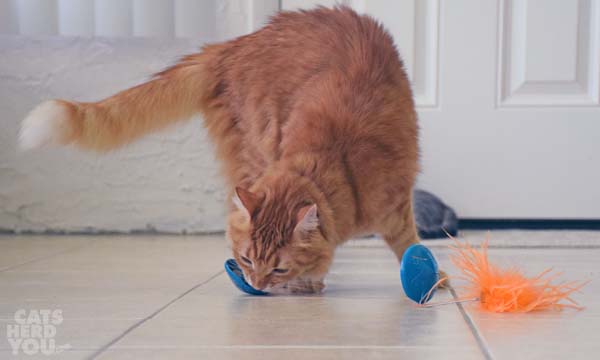
Newton eats from open puzzle feederNewton: It works to give me some treats. You’re just jealous. I’m going to take what’s left of my puzzle feeder and my kibble under the bed where you can’t stare at me eating. Didn’t anyone tell you it’s rude to stare?

Newton picks up the puzzle feederNewton: Oops! Lost my grip.

Newton drops the puzzle feederNewton: But check this out…. it’s like a smorgasbord all laid out for me.

Pierre: Are you going to share that smorgasbord?

Newton: I don’t see your name on it…

Newton eats scattered kibble from puzzle feederAshton: Wow, Newon, thanks for getting the kibble out of that puzzle for us!

Newton: ** SIGH **
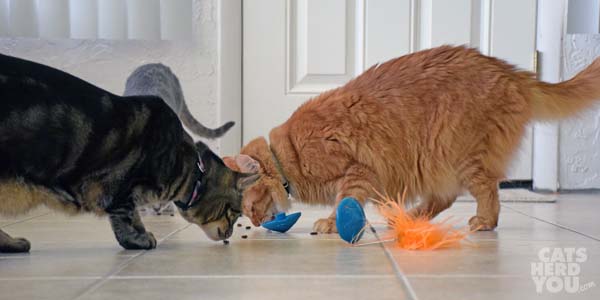
Everyone shares some of the scattered kibble


Reference:

Journal of Animal Physiology and Animal Nutrition, Using environmental and feeding enrichment to facilitate feline weight loss

Share Share on email
Email
Share on twitter
Twitter
Share on facebook
Facebook
Share on pinterest
Pinterest
Share on google
Google
Share on tumblr
Tumblr
Share on linkedin
Linkedin

June 30, 2015 Filed Under: Cats Tagged With: Ashton, Newton, Pierre 26 Comments

Behind the Camera

Pierre: It’s National Camera Day, and I’m on the receiving end of cameras entirely too often. So today, I’m going to be behind the camera instead. Say cat treats!

Pierre behind the camera


Weruva TruLuxe Giveaway Winner

Ellen Pilch is the winner of the giveaway of two cases of 24 count Weruva TruLuxe cat food 3 oz. cans. She chose People for Animals League to receive the donation of $100 worth of Weruva BFF food.

Share Share on email
Email
Share on twitter
Twitter
Share on facebook
Facebook
Share on pinterest
Pinterest
Share on google
Google
Share on tumblr
Tumblr
Share on linkedin
Linkedin

June 29, 2015 Filed Under: Cats Tagged With: Pierre 29 Comments

Take Your Cat to Work Day

Newton: There has been an injustice, and we need to talk about it.

Newton is displeasedToday is take your dog to work day. If you want to take your dog to work, go ahead, don’t let me stop you. But this is species discrimination.

Take your cat to work dayCats can be very helpful at work. We can take dictation.

Newton writingGive us a red pen, and we can proofread your writing.

Pierre works from homeWe’re good with computers, too. Though we do find it kind of hard to open the lid of a laptop without a little help.

Pierre with laptopAnd we’re great at mailroom operations.

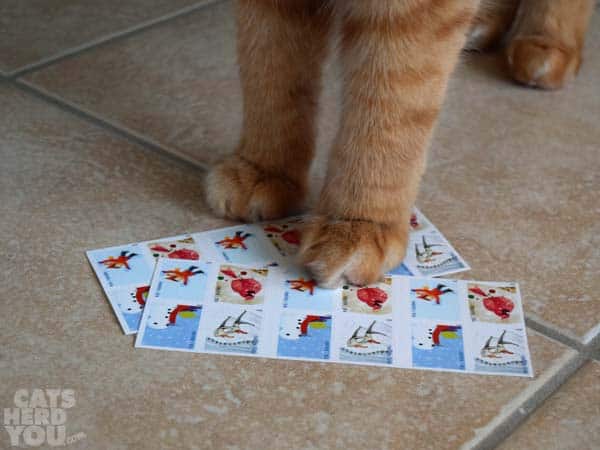
Newton with stampsEspecially receiving. Did you say you received a lot of boxes at work? We’re great with those.

Pierre in boxBut you know… I think it might be better just to take your dog to work after all. I have some important business to tend to here while you’re gone, anyhow.

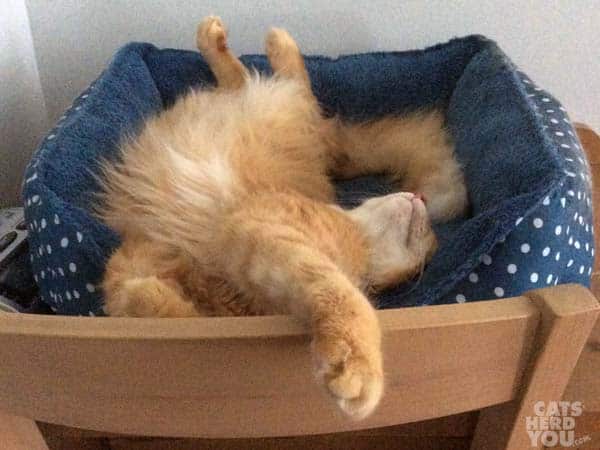
Newton snoozes blissfully

Share Share on email
Email
Share on twitter
Twitter
Share on facebook
Facebook
Share on pinterest
Pinterest
Share on google
Google
Share on tumblr
Tumblr
Share on linkedin
Linkedin

June 26, 2015 Filed Under: Cats Tagged With: Newton, Pierre 30 Comments

How Families Search for Lost Pets

As we saw in last week’s post about the month-long search for Phoebe that involved our entire neighborhood, some families go to great lengths to find their lost pet. The ASPCA conducted a survey to better understand how often cats and dogs are lost and what their families to recover them.

While the survey discovered that over the past five years, approximately the same percentages of households had either a cat or dog go missing (14% of households with dogs and 15% of households with cats), the difference in statistics for cats and dogs reveal real differences in how people search for lost pets and how likely they are to locate them.

Lost Pets and Identification

The study found that nearly all of the dogs but under 1/3 of the lost cats were wearing collars. Over half of the dogs and cats wearing a collar had some form of identification on it.

Ashton wears a collarUnder 1/4 of dogs and 11% of cats had microchips at the time they were lost. A surprising 11% of dogs and 56% had no identification at all when they were lost, including no rabies, license, ID tag, or microchip. With so many pets lost without identification, how many could possibly make it home safely?

Looking for Lost Pets

There are a lot of ways to search for lost pets, and not all of them proved successful strategies. Over ¾ of households who lost pets said that they waited for their pet to come home. 75% searchers for dogs went to the shelter to look for a lost pet, while only 22% of searches for cats checked the shelter.

Percentage of pets searched for at sheltersAcross the board, a smaller percentage of families with lost cats are tried various strategies to get them home, including putting an ad in the paper or calling veterinarians. It almost seems that the families with cats believed the myths about cats being independent.

Finding Lost Pets

Nearly half of the dogs were located by searching the neighborhood, while 20% came home on their own. On the other hand, 59% of cats returned on their own, and under 1/3 were found by searching the neighborhood.

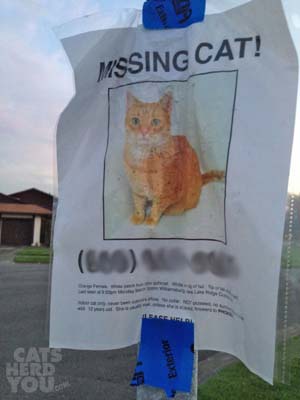
missing_cat_sign_xsA tag or microchip bearing the family’s information information brought 15% of dogs home but only helped bring 2% cats home. Half of those who searched for dogs said they had unsuccessfully tried hanging signs around the neighborhood, but only 17% of searches for cats tried it.

More Effort to Return Cats to Owners Needed

The survey showed that although a similar percentage of cats and dogs were lost, there was a much lower use of identification on cats as well as a lower overall rate of cats returning to their families.

A previous pair of studies about lost cats and dogs found that families do not check their local shelter until their cat has been missing for three days compared to one day for dogs. Additionally, families only visited the shelter once every eight days looking for their cat, while the families of dogs checked the shelter every three days.

Whether it’s a mistaken belief that cats can take care of themselves or some other factor, it’s important be more proactive than the average cat’s family to make sure that your missing cat gets home safely. Cats like Phoebe wouldn’t find their way home from far away on their own, but a family’s reaching out and being persistent can be the difference it takes to get a kitty home to the family again.


References

Animals, Frequency of Lost Dogs and Cats in the United States and the Methods Used to Locate Them
Journal of the American Veterinary Medical Association, Search and identification methods that owners use to find a lost dog
Journal of the American Veterinary Medical Association, Search and identification methods that owners use to find a lost cat

Share Share on email
Email
Share on twitter
Twitter
Share on facebook
Facebook
Share on pinterest
Pinterest
Share on google
Google
Share on tumblr
Tumblr
Share on linkedin
Linkedin

June 25, 2015 Filed Under: Rescue 15 Comments

  • « Previous Page
  • 1
  • …
  • 157
  • 158
  • 159
  • 160
  • 161
  • …
  • 494
  • Next Page »

Read Ashton’s Story in Rescued, Volume 2

These pawtographed books support Candy's Cats, who work tirelessly to find homes for cats in Florida.

Rescued, Volume 2: The Healing Stories of 12 Cats, Through Their Eyes. Proceeds from authographed copies benefit Candy's Cats.


Outside the US, contact us for shipping to your location.

Read Us by Email

Don't miss a thing! Cats delivered to your email.

Privacy Policy


Archives

All Rights Reserved

Articles and images on this site may not be reproduced in whole or in part without written consent. Please contact me if you are interested in reprinting or in having me write something unique for you.

Disclaimer

There are no veterinarians here. All health-related posts are the result of research and observation, but educational information is not a substitute for visiting your veterinarian. Do not self-diagnose your cat. For more information, see our disclaimer.

Policies

Disclosure Statement
Privacy Policy
Commenting Policy

Copyright © 2026 · Sometimes Cats Herd You · All Rights Reserved