Cats Herd You

Laugh. Learn. Love cats.

  • Home
  • Safety
  • Wellness
  • Rescue
  • Reviews
  • Life With Cats
  • About
  • Media Friendly
  • Contact

Owned or Semi-Owned Cats: Spay them All

It’s no secret that there are far more cats than there are homes, leading to a huge feral cat population. This is a problem not just in the US but in many other countries around the world. Part of this growing problem is sometimes blamed on people feeding these feral cats but not making sure they are also spayed or neutered.

A recent study looked at the differences in how people cared for cats falling into different categories:

notch-eared stray catSemi-ownership – Where the human did not think of themselves as the cat’s owner, but they had interacted with the cat for at least a month and fed the cat either frequently or always.

Ownership of passively-acquired cat – Where the human thought of himself to be the cat’s owner and had acquired the cat passively, such as taking in a formerly semi-owned cat..

There are no estimated numbers of how many semi-owned cats there are in the US today. An estimated 30-40 million community cats include feral, unowned, and semi-owned cats. A lot of the messages to spay and neuter cats are understandably aimed at people who consider themselves cat owners, since they are the ones who make the medical decisions about their feline family members. However, in this study, passively-acquired cats in Australia had a 99% spay/neuter rate. The US spay/neuter rate among owned cats is 85%, so messages to spay and neuter cats may be mostly preaching to the choir!

Semi-owned cats, on the other hand, have a lower rate of spay/neuter. In this Australian study, 47% of semi-owned cats were spayed or neutered. As a result, the semi-owned cats were more likely to had at least one litter of kittens, contributing to the ongoing feline overpopulation problem. Community cats contribute 80% of the feline birthrate annually. That’s a lot of kittens coming from feral, unowned, and semi-owned cats.

With so many kittens coming from this group of cats, should some of the effort currently going to into sending the message to spay and neuter owned cats be redirected to telling people that if you feed a cat, you also need to spay or neuter the kitty, too? The semi-owned cats seem to be the easiest part of the community cats to reach for spay/neuter efforts.

If you feed a stray, spay a stray


References and further reading:

PLOS One, Cat Ownership Perception and Caretaking Explored in an Internet Survey of People Associated with Cats
Journal of Applied Animal Welfare Science, Admissions of cats to animal welfare shelters in Melbourne, Australia
HSUS, Managing Community Cats
Journal of the AVMA, Humane strategies for controlling feral cat populations

Share Share on email
Email
Share on twitter
Twitter
Share on facebook
Facebook
Share on pinterest
Pinterest
Share on google
Google
Share on tumblr
Tumblr
Share on linkedin
Linkedin

September 24, 2015 Filed Under: Rescue 23 Comments

Got Leftover Veterinary Drugs? Safely Dispose of Them Saturday!

We’re bringing back a post from last year because it’s relevant again now. The National Prescription Drug Take-Back Day is coming this weekend, and we want to be sure you’re ready. So dig out those leftover pills you could never get into your hard to pill cat. There’s a safe way to dispose of them near you! You can find locations that will be accepting prescription drugs, no questions asked, on Saturday, September 26th by checking the National Take Back Initiative Collection Site Search or by calling 1-800-882-9539.

There are a lot of things you shouldn’t just throw away.

gray tabby cat in trash basket

Flushing your unused medications down the toilet or drain is a bad idea. The US Geological Survey has already found levels of drugs such as antibiotics, hormones, and contraceptives in 80% of the rivers and streams tested in part of a nationwide study. Additional studies have shown that fish and other wildlife can be adversely affected by medications, even when the medications are expired.

Instead of flushing medications, check to see if there are drug take-back events in your area one of the following ways:

  • Call your city or county government’s household trash and recycling service to ask whether a drug take-back program is available in your community. Some counties hold periodic household hazardous waste collection days, where over-the-counter and prescription drugs are accepted at a set location.
    Ask your pharmacist whether he or she knows of any medicine disposal programs in your area.
  • Find a local, independent pharmacy in your area who participates in drug disposal through disposemymeds.com.
  • Check the U.S. Drug Enforcement Administration’s web site for National Prescription Drug Take-Back Event information.
  • Ask your veterinarian. They may be willing to include unused medications originally purchased through them in shipments to their medical waste company.

If there aren’t any drug take-back events in your area, you can purchase special postage-paid packages from your local pharmacy that send medications back to a medical waste company. Some medications are ineligible for this program so read the fine print before you purchase.

The same guidelines can be used for disposal of human medications, though your veterinarian is unlikely to be willing to take back unused human medication. Keeping our groundwater safe is everybody’s responsibility!


Reference and further reading

US Environmental Protection Agency, Pharmaceuticals and Personal Care Products
US Geological Survey, Pharmaceuticals, Hormones, and Other Organic Wastewater Contaminants in U.S. Streams
US Department of Justice, National Take-Back Initiative

Share Share on email
Email
Share on twitter
Twitter
Share on facebook
Facebook
Share on pinterest
Pinterest
Share on google
Google
Share on tumblr
Tumblr
Share on linkedin
Linkedin

September 23, 2015 Filed Under: Safety 22 Comments

Little Orange Cousin

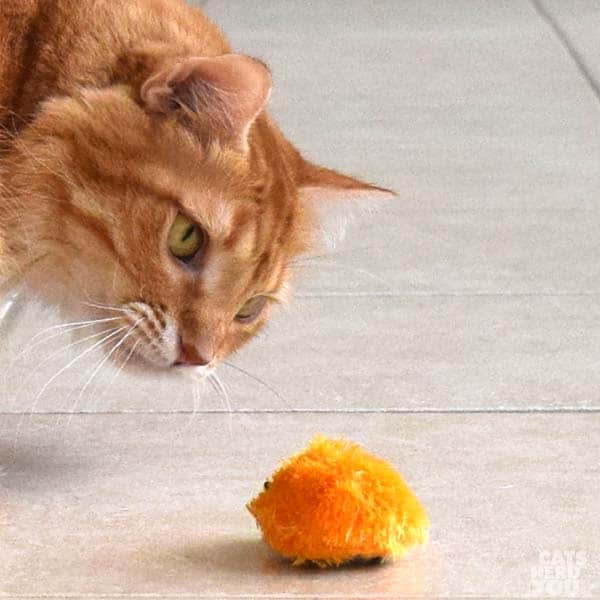
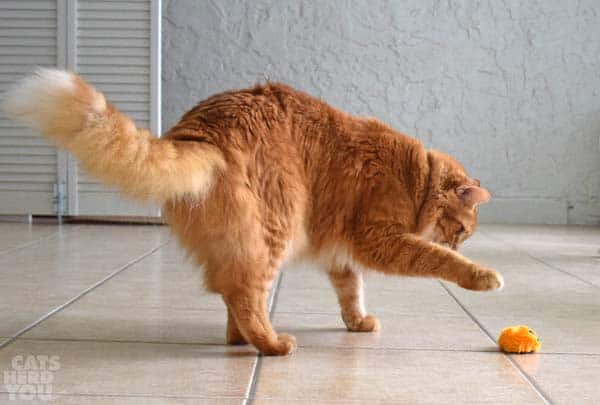
Newton: What’s that? It’s the same color as me, but much smaller.

orange tabby cat looks at the remote controlled bug

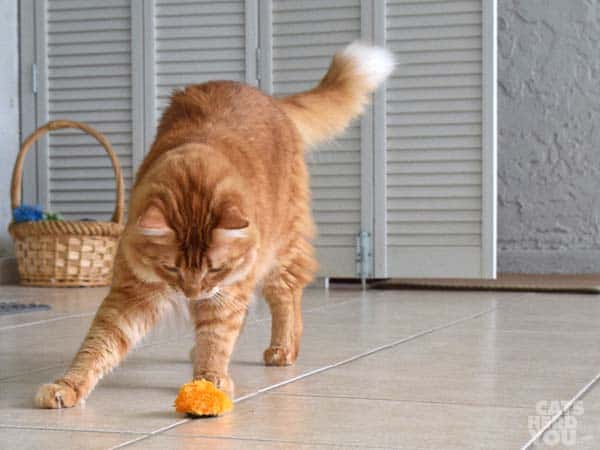
And it runs away from me when I try to get too close.

orange tabby cat chases remote controlled bug

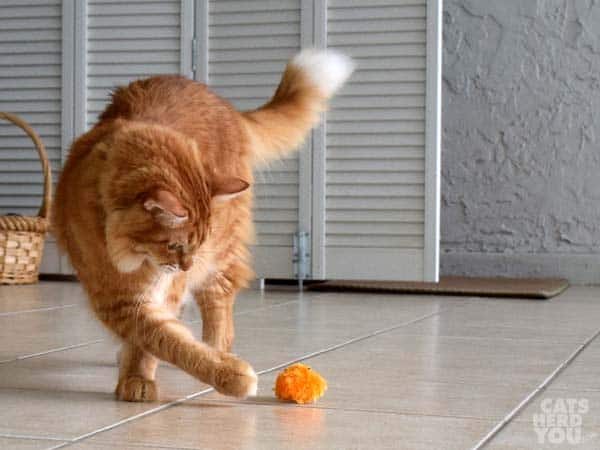
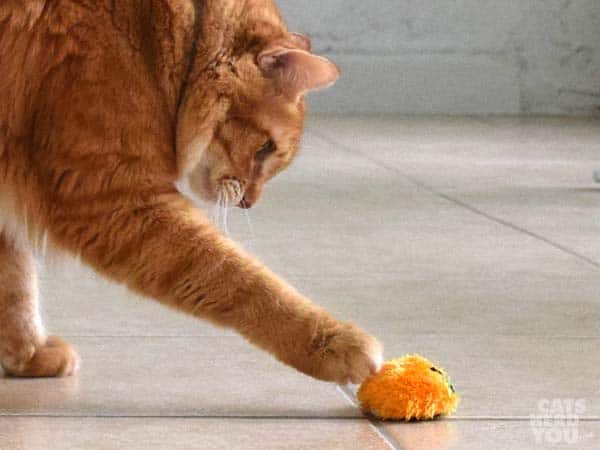
But when I give it a *whack* it doesn’t seem bothered at all. It just keeps on going.

orange tabby cat bats at remote controlled bug

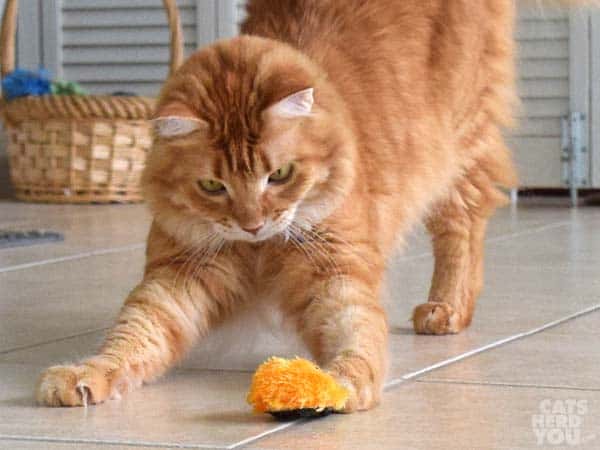
Come here, my new little friend!

orange tabby cat catches remote controlled bug

Where do you think you’re going? Don’t run away from me. We’re the same color. It’s like we’re cousins. But I’m the handsome cousin.

orange tabby cat pats remote controlled bug

A cousin I can push around, anyhow…

orange tabby cat paws remote controlled bug

Share Share on email
Email
Share on twitter
Twitter
Share on facebook
Facebook
Share on pinterest
Pinterest
Share on google
Google
Share on tumblr
Tumblr
Share on linkedin
Linkedin

September 22, 2015 Filed Under: Cats Tagged With: Newton 29 Comments

Adopt a Less-Adoptable Pet Week

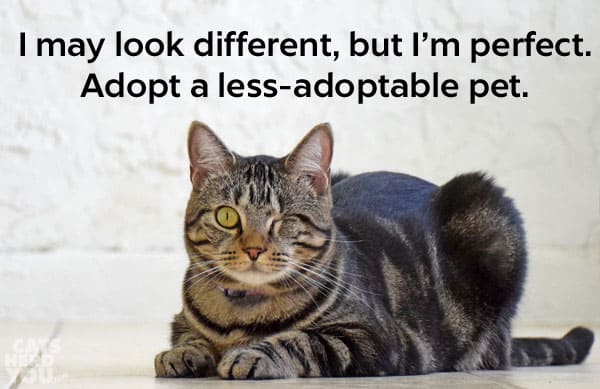
Adopt a Less-Adoptable Pet Week is a cause close to our hearts because Ashton is a less-adoptable cat.

one-eyed brown tabby cat: I may look different, but I'm perfect. Adopt a less-adoptable cat.According to a survey, 99% of shelters and rescue organizations have pets they are having difficulty placing in good homes. These “less-adoptable” pets fall into several categories.

Less Adoptable Cat Types

Senior Cats

Many adopters decide against senior cats because they are adopting after losing a previous pet, and they don’t want to imagine that happening again for a very long time. The thought of losing a senior cat to old age in only a few years makes them choose to adopt younger cats. Adopters may also be afraid of senior cats developing expensive medical conditions with their advanced age.

gray_tabby_rexWith the aging of the baby boom generation, a growing number of senior pets who lived their entire lives with a single human find themselves homeless when their human who becomes unable to take care of them due to their own age-related issues or even because of their human’s death. When the remaining family members are unable to care for the cat, frightened, disoriented senior pets don’t appear to be good potential companions and are harder to adopt.

Given time to settle into a new home, seniors can make wonderful, loving companions, great for adopters who want a cat to cuddle with but don’t want to have to wear a young cat out with a lot of exercise and play every day.

Shy Cats

Like the frightened senior pets mentioned above, shy cats don’t warm up to potential adopters when they come to a shelter or rescue organization to look for a new companion. Shy cats don’t “show well,” and their shyness can look like aggression when they are especially afraid at adoption events. The same cat that hisses at a potential adopter when being pulled out of the safety of his cage at an adoption event will come out of his shell after being given more time to warm up to strange humans, but it’s hard for the shy cat to get the chance to let his personality shine.

Shy cats can blossom in foster homes, but it can be hard for a potential adopter to take a shelter’s word that the cat cowering in their litterbox will be friendly and outgoing in their home environment once they have time to adjust to new surroundings.

Special Needs Cats

There are many types of special needs cats, such as diabetic cats or cats that need special diets for ongoing conditions. Each of these may worry potential adopters because they aren’t sure if they understand what care the cat will need, even though the extra care is often minimal. Education is key to understanding how much or little care a special need cat will require.

meowing silver tabbyOne of the most common conditions that causes cats to be considered special needs is Feline Immunodeficiency Virus (FIV), found commonly among stray cats. While there is a lot of lingering fear and misunderstanding about the transmission of this virus, studies have shown that friendly FIV-positive and negative cats live together without transmitting the disease. While FIV-positive cats should see their vet more promptly at any sign of illness, they can also live long, happy lives with their human and feline families. Still, lingering fear and misunderstanding make these cats harder to adopt.

Imperfect Cats

Many cats are simply imperfect. Even though they need no extra care, they may be missing an eye like our Ashton or a leg like our Cousin Earl. Others might have tattered ears or visible scars. These imperfections are usually from a previous mishap, and the cats simply aren’t as appealing to potential adopters on sight.

These different-looking cats are just as wonderful companions as their two-eyed or four-legged companions, but they are often overlooked because they don’t look as appealing.

Bonded Pairs

Cats who are relinquished to a shelter or rescue together sometimes turn to each other for comfort. It’s no wonder that the rescue organization decides that they must go to a home together so that they can continue to rely on each other for solace during stressful transitions and play together during joyful times. Not everyone wants to adopt two cats, or if they do, they may not want the particular combination of personalities, colors, or other characteristics that the bonded pair represents.

two longhaired cats

Bonded pairs of cats, with each other to help their confidence, may adapt more quickly to new situations then they would alone, but some adopters still hesitate.

Cats Who Must be “Onlies”

At the other end of the spectrum, cats who must go to homes with no other cats can take longer to adopt because the most likely adopters already have one or more cats. Some only cats also need to be the only pet in the home so they can’t join a household with dogs or other pets, either. This limits their potential pool of adopters and keeps them at the shelter or rescue group longer.

These “only” cats bond closely to their human family members, especially since they have no other feline companions.

Black Cats

People who work in shelters and rescues continue to report that black cats with wonderful personalities take longer to adopt than their more colorful counterparts. Black cats may not show well in the muted light of cages in shelters or may be victims of superstitions about their being unlucky. Anyone who has lived with a black cat can report that they are anything but unlucky, but are great companions with winning personalities.

black cat

What Shelters Are Doing to Help

Most shelters work to get their less-adoptable pets extra attention, knowing that they are going to take more families considering them than average before one decides that they have found the perfect companion.

Some shelters and rescues offer programs that help defray the potential costs of medical care that might put people off of adopting seniors or special needs cats. Others offer foster-to-adopt arrangements so that shy cats have time to come out of their shell in a home environment and show their potential adopter what loving companions they can be.

A number of shelters are also working hard to find innovative ways to help seniors keep their less-adoptable pets, serve as long-term foster homes, and adopt senior pets of their own.

Shelter outreach and programs alone won’t help place all of their less-adoptable pets. The next time you’re looking for a new family member, think beyond a kitten to a less-adoptable cat who could be a perfect fit for your family!


References and further reading:

Petfinder, Adopt a Less Adoptable Pet Week
The Veterinary Journal, Transmission of feline immunodeficiency virus (FIV) among cohabiting cats in two cat rescue shelters

Photo credit:

depositphotos/cynoclub

Share Share on email
Email
Share on twitter
Twitter
Share on facebook
Facebook
Share on pinterest
Pinterest
Share on google
Google
Share on tumblr
Tumblr
Share on linkedin
Linkedin

September 21, 2015 Filed Under: Rescue Tagged With: Ashton 30 Comments

  • « Previous Page
  • 1
  • …
  • 141
  • 142
  • 143
  • 144
  • 145
  • …
  • 494
  • Next Page »

Read Ashton’s Story in Rescued, Volume 2

These pawtographed books support Candy's Cats, who work tirelessly to find homes for cats in Florida.

Rescued, Volume 2: The Healing Stories of 12 Cats, Through Their Eyes. Proceeds from authographed copies benefit Candy's Cats.


Outside the US, contact us for shipping to your location.

Read Us by Email

Don't miss a thing! Cats delivered to your email.

Privacy Policy


Archives

All Rights Reserved

Articles and images on this site may not be reproduced in whole or in part without written consent. Please contact me if you are interested in reprinting or in having me write something unique for you.

Disclaimer

There are no veterinarians here. All health-related posts are the result of research and observation, but educational information is not a substitute for visiting your veterinarian. Do not self-diagnose your cat. For more information, see our disclaimer.

Policies

Disclosure Statement
Privacy Policy
Commenting Policy

Copyright © 2026 · Sometimes Cats Herd You · All Rights Reserved