Cats Herd You

Laugh. Learn. Love cats.

  • Home
  • Safety
  • Wellness
  • Rescue
  • Reviews
  • Life With Cats
  • About
  • Media Friendly
  • Contact
You are here: Home / Archives for Rescue

World Spay Day 2016

There are more cats than there are families with room in their homes for them. Lots more. The ASPCA estimates there are 70 million stray cats in the United States alone. 3.4 million enter animal shelters every year, and 41% never come back out again. Yet more unwanted kittens are born every day.

World Spay Day

No one wants to see 1.4 million cats die in shelters every year, but what can we do about it? The most effective way to combat overpopulation is by spaying and neutering cats. In other words, making them sterile so they won’t continue to reproduce and have kittens that there aren’t loving families to adopt.

litter of kittens

Cats who are spayed and neutered live longer, healthier lives, too. Both spayed and neutered cats are less likely to roam far from home, making them less likely to be hit by a car or lost. Neutered male get into fewer fights with other cats, and they are less territorial, meaning their drive to spray in the house to mark territory is reduced or eliminated. They also can’t get certain kinds of cancer, like testicular cancer. Female cats, once spayed, are protected from ovarian and uterine cancer, and mammary cancer chances are reduced if the spay is performed before the cat goes into heat the first time. And of course, spayed female cats can’t have unwanted kittens.

cat on grass

World Spay Day is tomorrow, and it is a chance to help raise awareness of the importance of spay and neutering of cats both here in the US and abroad. Many people know they should spay or neuter their cat but don’t think they can afford it, but this is a great chance to let them know that there are lots of resources out there for reduced cost and even subsidized programs for spay and neuter.

Pet Alliance of Greater Orlando Mobile Vet Clinic

Do you need to direct someone to a reduced cost spay/neuter clinic? This tool helps you find them in the US. We can all be part of the solution by helping spread the word about how to avoid contributing to pet overpopulation.


Reference and further reading:

ASPCA, Shelter intake and surrender, Pet statistics

Photo credits:

flickr creative commons, abcrumley and ncfc0721
wikimedia commons, Radevormwald

Share Share on email
Email
Share on twitter
Twitter
Share on facebook
Facebook
Share on pinterest
Pinterest
Share on google
Google
Share on tumblr
Tumblr
Share on linkedin
Linkedin

February 22, 2016 Filed Under: Rescue 22 Comments

Why Cats are Rehomed

The idea that cats can’t stay in their “forever” homes isn’t something we like to think much about, but it’s something that happens more often many people imagine. A recent study by the ASPCA showed that over five years, 1.7% of households who currently have or have had pets rehomed one or more cats in the past 5 years. With 42.9 million US households with cats, that’s 729,300 households who rehomed one or more cat. That’s a lot of cats!

These cats ended up primarily in shelters (40%) or with a friend or family (30%). Surprisingly, 19% reported that they surrendered their cats to a veterinarian, making vets the third largest place that cats are rehomed. Smaller numbers went to live with strangers. Sadly, 2% of households reported setting their unwanted cats free, which works out to an estimated 14,586 households over five years leaving cats to fend for themselves.

why cats are rehomed

How can families who think they don’t have options help keep these cats with them?

Pet Problems

A large number of cats, 42%, are rehomed because of problems related to the cat. These may have been problematic or aggressive behavior or health problems that the family couldn’t handle.

The most common issues that makes cats end up in shelters are litterbox issues. Many people struggle with cats who won’t use their litter boxes and don’t understand that there may be fairly simple solutions like cleaning the box more often, providing more boxes, or using a different litter. See What Your Cat is Telling You by Going Outside the Litterbox for some additional ideas about things that can cause this common issue.

litter box heart

Housing Problems

A large number of cats (19%) ended up rehomed because of housing issues, such as landlords who don’t allow pets or not having enough space.

It’s unfortunate that pet security deposits and even additional monthly fees for “pet rent” can add to monthly fees, especially when these extra fees are sometimes in place not to compensate landlords for potential damage but to raise revenues from families with pets.

no pets allowed sign

There are a handful of organizations in US communities who may help with rental housing issues for pet owners, such as the Family Forever Foundation in Orlando, Florida. Due to the difficulty that families with pit bulls have finding rental housing that will accept them with their dogs, a number of organizations specifically for that purpose might have information you could use to find pet-friendly rentals in your area, too. See this list of organizations for assistance in your area.

Another cause of housing-related relinquishments not mentioned in the study but worth considering is military deployments. Thankfully, a growing number of organizations is available to foster cats and dogs for deployed military so that they can rest easy knowing that their four-legged friends are safe and waiting for them back in the US upon their return.

Cost Problems

In our difficult economy, 7% reported they couldn’t afford the cost involved in having a pet. When people end up jobless or underemployed, it’s understandable that they worry how they will afford to feed their cat and they may look for another home to be sure their furry friend is cared for. They may not realize that many parts of the country have recognized that providing assistance keeping pets in their homes is less expensive than taking them into the shelter system, so help may be available. For example, Orange County Animal Services has a pet pantry that provides food to struggling pet owners.

cat with scattered coins

Some communities even some programs specifically geared toward helping seniors on fixed incomes keep their pets. These types of assistance programs are often referred to as pet pantries, so you can use that keyword along with your city name in a web search to see what help is available nearby.

Family Problems

Over a quarter of the cats rehomed were because of personal or family health troubles, allergies to the cat, a new person in the household who didn’t like the cat, a death in the family, a new baby in the household, or for a lack of time to care for the cat. These all fall under the general category of family problems, and they are some of the most difficult to resolve without seeing the cat leave the household.

Allergies are a highly-cited reason for giving up cats, but depending on the level of allergy, many people are able to cope with their cat allergies. Children who grow up in homes with cats are less likely to develop allergies to them later on, so managing your allergies now may pay off for your kids down the road!

Cat with Tissues

You don’t have to give up your cat because you are going to have a baby. Your cat won’t kill your baby by sucking the baby’s breath, despite the persistence of the old wives’ tale. Fears of toxoplasmosis during pregnancy are oversold by doctors who seem to find “get rid of the cat” an easy answer rather than looking more closely at the risk factors.

It’s always sad to see cats looking for new homes because their primary caregiver passed away. These cats are often difficult to rehome because they may be frightened or confused. Some hospice organizations now integrate pet care and rehoming services, often in partnership with rescue organizations, which can help find temporary placement until the family is able to take them back or even permanent homes for these unfortunate cats.

Every cat whose family is sadly considering rehoming him or her can’t be kept in their home, but there are a lot of resources out there that can help keep some cats safe and happy with their families.


References and Further reading

Open Journal of Animal Sciences, Goodbye to a Good Friend: An Exploration of the Re-Homing of Cats and Dogs in the U.S.
American Pet Products Association, APPA National Pet Owners Survey

Creative Commons images curtesy

Annie Mole on flickr
Jennifer on flickr
Paul Joseph on flickr
Quinn Dombrowski on flickr
Katherine Anderson on flickr


Share Share on email
Email
Share on twitter
Twitter
Share on facebook
Facebook
Share on pinterest
Pinterest
Share on google
Google
Share on tumblr
Tumblr
Share on linkedin
Linkedin

January 21, 2016 Filed Under: Rescue 24 Comments

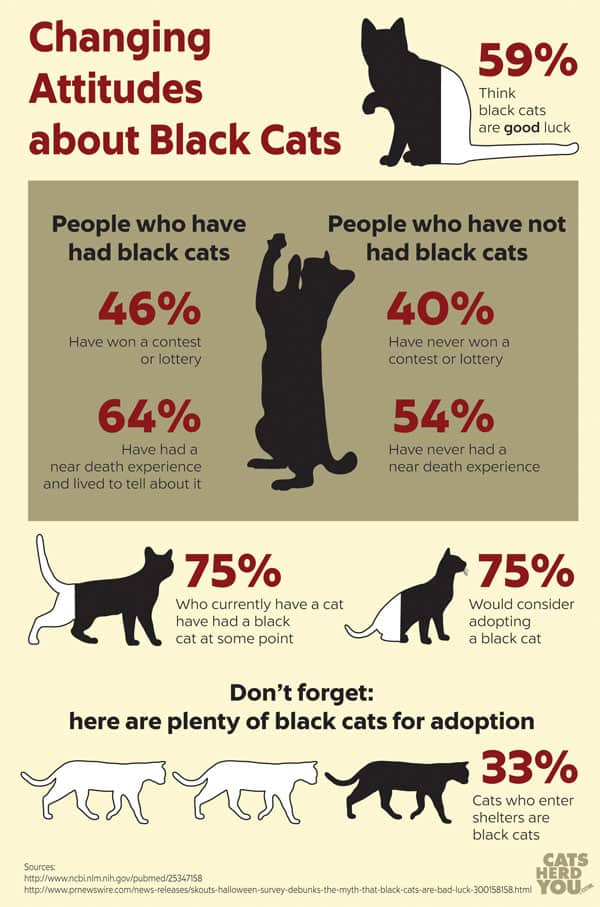
Changing Attitudes about Black Cats

Black cats sometimes seem like the misunderstood ones of the cat world.

They were blamed in Pope Gregory XI’s 1233 Vox in Rama document in for being the incarnation of Satan. They were then labeled the familiars of witches and burned alongside their owners during witch hunts. Even now, shelter workers and rescue volunteers insist that black cats take the longest to adopt, even though studies looking at the actual numbers of cat adoptions show that this isn’t actually the case.  Black cats are even persistently thought of as bringing bad luck and blamed for being hard to photograph in modern selfies.

But there may be good news for black cats at last with attitudes changing. This infographic has more information.

Changing Attitudes Toward Black Cats Infographic

Share Share on email
Email
Share on twitter
Twitter
Share on facebook
Facebook
Share on pinterest
Pinterest
Share on google
Google
Share on tumblr
Tumblr
Share on linkedin
Linkedin

November 5, 2015 Filed Under: Rescue Tagged With: infographic 18 Comments

It’s National Feral Cat Day

Today is National Feral Cat Day. An estimated 70 million cats live outdoors, getting by the best they can, often in social groups called colonies. Unlike stray cats who enjoy human companionship but find themselves without it, feral cats aren’t socialized with humans, so they are afraid of them. So you can’t just adopt a feral cat that happens to live near you.

Feral cat

Ways to Help Feral Cats

If you can’t adopt feral cats, what can you do for them? You can help take care of your local colonies by making sure they have food and shelter. Something else you can do is  very important: get them neutered to prevent their having lots and lots of kittens. Areas like Florida have kittens all year round, and overpopulation can happen in a hurry. Feral cats can be trapped, neutered, eartipped to identify that they are neutered, and then returned (TNR) to their colonies where they can live out their lives but not continue to reproduce. Groups like Alley Cat Allies can teach you more about how that is done.

Many communities have groups that actively help organize affordable spays and neuters for feral cats going through the TNR process. Our local group, Alley Cat Allies, even has an agreement with our county shelter that they can get the feral catss out and return them to their colonies. This is somewhat unusual, and animal control in most areas of the country doesn’t make extra provisions for feral cats. In fact, feral cats usually die in shelters because they aren’t adoptable.

Feral black cat

What can you do where you live to help feral cats? First of all, you can spay and neuter your own cats so that you don’t risk accidentally contributing to the feral cat population in your area. You can feed feral cats. If you do feed them, check to see if you have an organization in your community to help you with trap, neuter, and return.

Also, if you live in a cold climate, you can build shelters for feral cats. Winter is coming, and feral cats will appreciate a place to escape the weather.

Most important, spread the word that feral cats are part of the community, too, and that they deserve our care and concern.


Photo credits

flickr/Quinn Dombrowski
flickr/fauxto_digit

Share Share on email
Email
Share on twitter
Twitter
Share on facebook
Facebook
Share on pinterest
Pinterest
Share on google
Google
Share on tumblr
Tumblr
Share on linkedin
Linkedin

October 16, 2015 Filed Under: Rescue 17 Comments

  • « Previous Page
  • 1
  • 2
  • 3
  • 4
  • 5
  • 6
  • …
  • 11
  • Next Page »

Read Ashton’s Story in Rescued, Volume 2

These pawtographed books support Candy's Cats, who work tirelessly to find homes for cats in Florida.

Rescued, Volume 2: The Healing Stories of 12 Cats, Through Their Eyes. Proceeds from authographed copies benefit Candy's Cats.


Outside the US, contact us for shipping to your location.

Read Us by Email

Don't miss a thing! Cats delivered to your email.

Privacy Policy


Archives

All Rights Reserved

Articles and images on this site may not be reproduced in whole or in part without written consent. Please contact me if you are interested in reprinting or in having me write something unique for you.

Disclaimer

There are no veterinarians here. All health-related posts are the result of research and observation, but educational information is not a substitute for visiting your veterinarian. Do not self-diagnose your cat. For more information, see our disclaimer.

Policies

Disclosure Statement
Privacy Policy
Commenting Policy

Copyright © 2026 · Sometimes Cats Herd You · All Rights Reserved