Cats Herd You

Laugh. Learn. Love cats.

  • Home
  • Safety
  • Wellness
  • Rescue
  • Reviews
  • Life With Cats
  • About
  • Media Friendly
  • Contact
You are here: Home / Archives for Rescue

World Cat Day

It’s World Cat Day. While we have cats here with us in our own living rooms, this is a good day to stop and give thanks to people who are making a difference for cats in their communities all around the world.

World Cat Day

Here are just a few organizations around the world who are working hard to make a difference. Thanks to their efforts on points all around the globe today and every day.

Athens, Greece

Joan Gage wrote in The Secret Life of Greek Cats,“Everywhere you go in Greece you will find a cat…Cats are the punctuation in Greek life…During their catnaps they dream of the days when they were worshiped by the ancient Egyptians and didn’t have to rely on the kindness of strangers for food.”

cat in Athens. photo credit Flickr Creative Commons, Liz Lawley

Today, Greece has an estimated four million stray cats and dogs, and cities throughout are known for large populations of street cats. The Greek debt crisis meant an increased number of abandoned cats. These cats do have to rely on the kindness of strangers, or at least of neighbors who feed and care for them.

Helping Cats in Greece

The high population of feral cats makes organizations like Nine Lives Greece even more important. Nine Lives Greece is a volunteer network working on reducing feral cat population through TNR. Not only does the organization provide food and veterinary care for over 400 street cats every day, they help many more. Nine Lives spayed and neutered over 1200 cats in Athens in 2015, all through volunteer efforts. They also try to find homes for as many stray and abandoned cats as possible.

Inawashiro, Japan

Feral cats have large populations throughout Japan, especially in areas where there are plentiful food sources, such as urban centers. Probably most famous is Japan’s “Cat Island,” Tashirojima, which has become a tourist destination with more cats than humans living there.

The Japanese really love cats. Cat cafes, now becoming popular in the US, were first found in Japan. TNR programs to spay and neuter feral cats in communities are spreading throughout the country as people take care of the cats who live in their own communities.

street cats feeding in Osaka, Japan. depositphotos/cowardlion

Helping Cats in Japan

The Japan Cat Network is a volunteer-run organization helping the people throughout Japan help cats. They teach the importance of spay/neuter and TNR and connect people to local resources. The organization also became known for rescuing animals from the evacuated zone around the Fukushima Daiichi Power Plant, and they run a shelter where these evacuees live.

Istanbul, Turkey

Turkey has an estimated two million stray cats, and Istanbul is well-known as a place where you can see feral cats around the city streets. They are so prevalent that some people refer to the city as “Catstantinople” after the city’s former name and its oversupply of felines.

white cat with black spots playing in Istanbul. photo credit: deposithpotos/deraugenzeuge

You can find cats everywhere in the city, often sleeping on parked cars or following fishermen in hope of a free meal. Feral cats in Istanbul aren’t usually starving and hoping for a free meal. A remarkable network of humans feeds them, and Turkish state policy is to trap, neuter, and then release them again (TNR). Unfortunately, there aren’t enough funds to perform TNR on such a big population of cats, so day-to-day care falls to the neighborhoods where the cats live.

Helping Cats in Turkey

He’Art of Rescue, a volunteer-run nonprofit started  in 2011, helps feral cats in critical situations in Istanbul, fostering them as they are nursed back to health. They have found homes for rescued cats abroad where they can live out their lives in comfort away from the city streets.

More Places Around The World

There are thousands of organizations and committed cat lovers making a difference for cats who don’t have anyone else other places around the globe.

World Cat Day 2016 - Thank you

To every single one of them, thank you. World Cat Day wouldn’t be the same without you.


Image credits:

depositphotos/cowardlion
Flickr creative commons/Liz Lawley
depositphotos/deraugenzeuge

Share Share on email
Email
Share on twitter
Twitter
Share on facebook
Facebook
Share on pinterest
Pinterest
Share on google
Google
Share on tumblr
Tumblr
Share on linkedin
Linkedin

August 8, 2016 Filed Under: Rescue 22 Comments

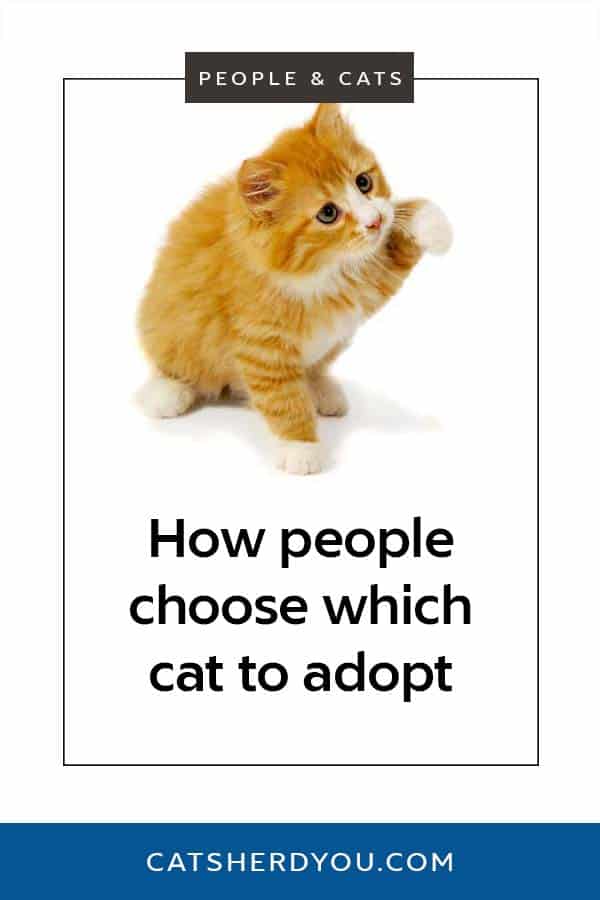
Why People Choose the Cats They Adopt

What drew you to your cat? Out of all of the millions of cats in the world, why did you adopt your kitty?

Why do adopters choose the cats they do?

A new study in the Journal of Veterinary Behavior tries to answer the question of why people choose the cats they adopt from a shelter. They surveyed adopters at Loudon County Animal Services in Waterford, Virginia.

Why People Say They Adopt

Unsurprisingly, most people who responded to the survey said that they adopted the cat for companionship for themselves.

Young woman holding cat and old book, close-up - image credit depositphotos/belchonock

What is surprising is the second biggest reason that people gave for adopting: to save the cat. Maybe this should be less surprising since the survey was done at a municipal shelter that at the time euthanized for time, space, and behavior.

Other reasons people gave for adopting were for companionship for their children or for their cat.

Why People Adopt a Particular Cat

The biggest behavioral reason that people said was very important wasn’t a surprise. They said it was most important that the cat be friendly toward the adopter. Friendliness toward children and other cats were also important criteria in deciding to adopt a cat to many adopters. So were the cat seeming to be a playful and happy.

Inquisitive orange cat. Image credit depositphotos/c-foto

An unexpectedly important adoption factor was the cat’s history or story. Could shelters use information given to them about a cat on intake to help get cats adopted more quickly? Looking at this study, the answer may be yes!

Survey respondents also named seeing toys in the cage with the cat as being a very important factor in making their decision. This is something else that shelters and rescue organizations can take advantage of right away.  If people are more drawn to cats with toys, then let potential adopters see them with toys, especially harder-to-adopt cats like adults who adopters favor over kittens.

orange and white cat plays with toy. image credit: depositphotos/photo-deti

Physical characteristics such as a coat length or particular gender were less important selection factors for adopters, but those that felt either was important were more likely to prefer short hair or a male cat.

Behavioral Characteristics More Important to Adopters

Overall, the study concludes that behavioral characteristics are more important to adopters than physical characteristics when they are choosing a cat to be part of their family.

How does this agree – or not – with the reason you adopted your cat?


Research and further reading

Journal of Veterinary Behavior, Factors Affecting the Selection of Cats by Adopters
Loudon County Virginia Animal Service Statistics Archives

Image credits: depositphotos/belchonock, c-foto, photo-deti

What drew you to your cat? Out of all of the millions of cats in the world, why did you adopt your kitty? Research may surprise you! #cats #adoption #adoptdontshop
Share Share on email
Email
Share on twitter
Twitter
Share on facebook
Facebook
Share on pinterest
Pinterest
Share on google
Google
Share on tumblr
Tumblr
Share on linkedin
Linkedin

June 27, 2016 Filed Under: Rescue 21 Comments

Seeing an Impact from Spay/Neuter Campaigns

I always joke that here in Florida, we have two seasons: summer and not summer. We also have kitten season and more kittens season.

Cat with Kittens. Image credit: depositphotos/cynoclub

It’s sometimes hard to remember that it doesn’t work that way in the rest of the country. I have driven legs of transports that took kittens north during the winter to rescue organizations who didn’t have any kittens available. In the depth of winter, the snowy parts of the country see the number of kittens in shelters and rescue organizations dwindle to nothing. Female cats have enough trouble fending for themselves under the difficult conditions and don’t procreate successfully that time of year.

But when it’s kitten season, there are cats and kittens galore, more than rescues can handle, right?

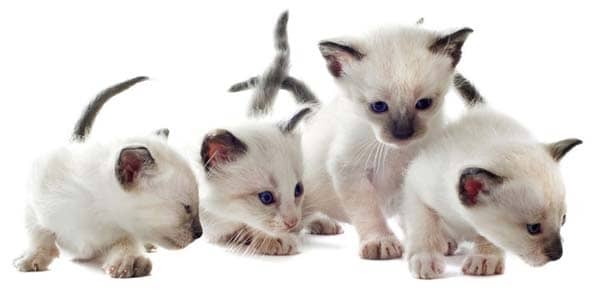
siamese kittens - image credit: depositphotos/cynoclub

Well, that’s why I was surprised to learn that in some parts of the country, this year there aren’t as many cats and kittens needing care as last year or the year before that. The shelter intake numbers are actually down. From where I sit in the part of the country that seems to be a feral cat factory, this seems impossible to imagine. What’s going on?

Cats, by the Numbers

The ASPCA noticed this trend, and they dug into the numbers to figure out what’s going on. Most important, the numbers reported by their partner shelters across the country confirmed that overall cat intake is trending downward.

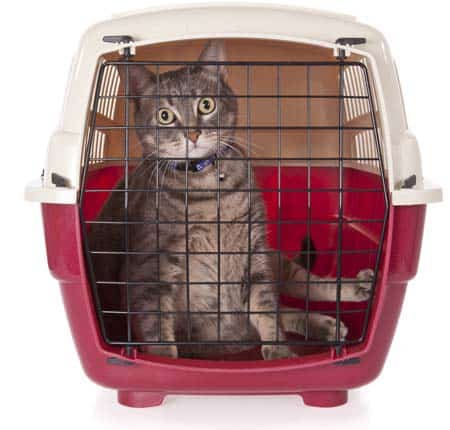
cat closed inside pet carrier. Image credit: depositphotos/Lusoimages

When they took a closer look at the American Pet Products National Pet Owner’s Survey, they found that in the past 12 years, they discovered that while the numbers of cats living with families has increased, the way that people add a cat or kitten to their family has changed. Less people report adding cats to their family as a result of kittens born from their own cat. Less people are also reporting they got a cat from a friend or took in a stray. At the same time, people who say they adopted a cat more than doubled.

If people are responsibly having their own cats spayed or neutered, they’re going to have to turn to these outside sources for new pets to join their families, so that’s actually really good news!

What Could be Causing this Change?

Just like the dropoff of supply in kittens in winter happening in some parts of the country and not others during the winter, rescue organizations and shelters everywhere don’t seem to be seeing these gradual shifts in numbers yet. But the trend seems to be real enough that years of spay and neuter campaigns and trap-neuter-return (TNR) programs to try to control the feral cat population are finally starting to show results.

two longhaired cats. Image credit: depositphotos/cynoclub

Everyone who has reminded a friend or neighbor to spay or neuter their cat has made a difference. Every time you let people know there are reduced-price options for sterilizing their cat when they can’t afford a full-service veterinarian has made a difference. Every feral cat you feed who you also get spayed or neutered has made a difference. The effort isn’t over, but it’s making a difference.

It’s hard to believe when change seems so slow to come, especially if you are in one of the parts of the country like mine where the supply of cats seems absolutely endless. But there’s evidence on a broad scale even if it’s not in your community yet that the years of effort to educate the public into caring better for the cats among us is paying off.

smiling, meowing kitten. Image credit: depositphotos/Cherry-Merry

That’s something we can all be happy about.


Image credits: depositphotos/cynoclub, depositphotos/Lusoimages, depositphotos/Cherry-Merry

Share Share on email
Email
Share on twitter
Twitter
Share on facebook
Facebook
Share on pinterest
Pinterest
Share on google
Google
Share on tumblr
Tumblr
Share on linkedin
Linkedin

June 6, 2016 Filed Under: Rescue 20 Comments

Don’t Forget ID for Your Cat

It’s National Pet Identification week. Do you know if your kitty has the right ID for your cat necessary to find her way home to you?

Your cat doesn’t have pockets to carry a wallet, so ID for cats takes the form of a microchip and tag. Only two percent of cats who end up in shelters have some form of ID, and until your cat learns to talk, that’s the only way your cat can tell people where she lives.

“A pet’s looks and fur can change drastically in only a few days or weeks on their own,” says Kim Freeman, pet detective and owner of Lost Cat Finder. Cats covered in dirt or wet can look surprisingly different than a nearby lost cat sign that has their photo on it, so ID is the best way for someone to tell it really is your cat.

Can you Identify this Cat?

Microchips

A microchip is a small transponder about the size of a grain of rice that is has with a unique identification number. The chip is implanted by a simple procedure at your vet or even at a local shelter. Reduced-cost and sometimes even free microchips are available at events in your community at various times during the year.

Be sure to register your chip so that if someone finds your kitty, they can get your contact information. Your chip isn’t registered automatically!

If You Move to a New Home

Update your contact information with the microchip registry so that if someone finds your cat, they will be able to contact you. Animal shelters run into heartbreaking dead ends when they scan a cat for a chip but the phone number on the chip is disconnected. Don’t let this happen to your cat!

british shorthair cat using computer

After moving, access your cat’s microchip registry to update the information. Photo: depositphotos/ots-photo

Collars

If your cat will wear a collar, make sure you use a breakaway collar that will come off if your cat gets it caught on something. Safety first!

Include daytime and evening contact information on your cat’s tag, since you never know when someone might have to try to call you. If your cat has a medical condition like diabetes, you can include that on the tag, too, so that if your kitty is lost, he can get the appropriate care until you are reunited.

safety collar with ID tag helps your kitty get home safely

If the noise of a metal tag bothers you or your cat, there are lots of options available, including silent silicon tags and metal tags that slide onto a collar so they don’t dangle.

If You Move to a New Home

Make sure your cat’s tag includes a cell phone number or the number of someone who knows how to reach you.

Microchip Plus Collar

The ASPCA recommends your cat have a registered microchip and also wear a collar with personalized ID tag. Anyone who finds your cat can read an ID tag, while the microchip reader requires the good Samaritan to go to a veterinarian or shelter where they can read the chip.

Collars with tags make it easy for anyone to get your cat home to you. A microchip, hidden beneath your cat’s fur, won’t be lost like a collar can, so it’s a great way to be sure your cat won’t “lose her wallet” and not have any ID when lost.

We all hope our cat never gets lost, but make sure your kitty has the best chance to get back home to you as quickly as possible by chipping and collaring your cat with ID for your cat.

woman holding kitten wearing collar

A cat with both microchip and collar has the best chance of getting home and back into your arms again. Photo: depositphotos/elwynn


This post contains affiliate links, which means we receive a small percentage if you make a purchase using the link on this page.

Share Share on email
Email
Share on twitter
Twitter
Share on facebook
Facebook
Share on pinterest
Pinterest
Share on google
Google
Share on tumblr
Tumblr
Share on linkedin
Linkedin

April 18, 2016 Filed Under: Rescue 17 Comments

  • « Previous Page
  • 1
  • 2
  • 3
  • 4
  • 5
  • …
  • 11
  • Next Page »

Read Ashton’s Story in Rescued, Volume 2

These pawtographed books support Candy's Cats, who work tirelessly to find homes for cats in Florida.

Rescued, Volume 2: The Healing Stories of 12 Cats, Through Their Eyes. Proceeds from authographed copies benefit Candy's Cats.


Outside the US, contact us for shipping to your location.

Read Us by Email

Don't miss a thing! Cats delivered to your email.

Privacy Policy


Archives

All Rights Reserved

Articles and images on this site may not be reproduced in whole or in part without written consent. Please contact me if you are interested in reprinting or in having me write something unique for you.

Disclaimer

There are no veterinarians here. All health-related posts are the result of research and observation, but educational information is not a substitute for visiting your veterinarian. Do not self-diagnose your cat. For more information, see our disclaimer.

Policies

Disclosure Statement
Privacy Policy
Commenting Policy

Copyright © 2026 · Sometimes Cats Herd You · All Rights Reserved