Cats Herd You

Laugh. Learn. Love cats.

  • Home
  • Safety
  • Wellness
  • Rescue
  • Reviews
  • Life With Cats
  • About
  • Media Friendly
  • Contact

Bedtime Routine

Our friend Summer wrote about the bedtime rituals at her house, and it inspired us kitties to tell you about ours, too.

Bedtime Treats

Bedtime treats started as a time for Pierre to get a make-up meal for the ones he didn’t finish during the day. He is a fussy, slow eater and almost never finishes his meals, and giving him a third, small meal lets him spread his food out during the day a little more.

gray tabby cat sits next to bowl

The rest of us cats get treats during this time because if we don’t get treats, we bother Pierre too much! It is also a chance for us to all practice our tricks. Cupcake fist bumps. Ashton waves. Newton says he is too handsome for tricks and steals the treats while the head peep tries to get him to do anything.
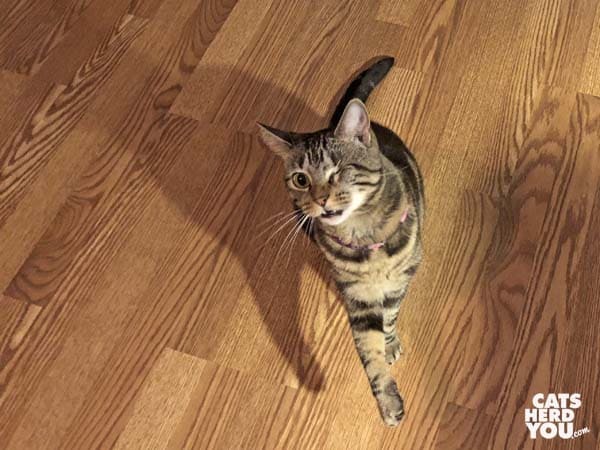
one-eyed brown tabby cat waves paw

Tooth Brushing

Pierre is so slow that we finish our treats way before he is done. This is when the head peep goes to brush her teeth. This is a huge distraction for Cupcake, who would otherwise bother Pierre.

Cupcake likes to observe the whole tooth brushing routine because she knows that at the end, the head peep will pour out a cup of water for her into the sink. She loves to play in the stream of water.
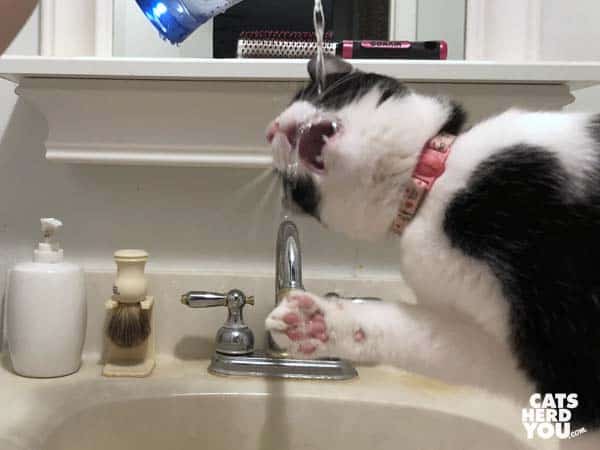
black and white tuxedo cat plays with water

After this, Cupcake needs to be toweled off. She doesn’t like anything touching her paws, but they are usually soaked, so it turns into a nightly wrestling match with Baron Von Bath Towel. She shows Baron Von Bath Towel who is boss every time!

Bedtime Treat Cleanup

By the time Cupcake is done kicking bath towels into submission, Pierre is finally done eating. Ashton is in charge of making sure he didn’t leave any crumbs.
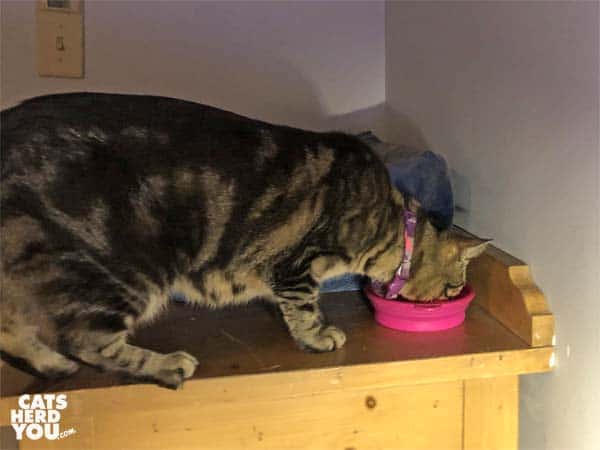
one-eyed brown tabby cat eats from bowl

When Ashton finishes, the head peep washes the bowl and sets it out to dry for the next night. The silicon bowl is only used for Pierre’s bedtime treats because our usual bowls make a distinctive sound when they are set on the counter. The head peep thought having a bowl that didn’t make that would would make it so we didn’t associate bedtime treats with food from a bowl. Sometimes she doesn’t give us enough credit.

Human Bedtime

The manpeep usually goes to bed before we do. He sleeps in the other bedroom because he sleeps so loudly that the head peep would never be able to sleep. So when the head peep is headed to bed, she can hear the squeak of the hinges as Cupcake goes to visit him for a while.

If the head peep has the bedroom light on for a while reading, Pierre comes back to sit on her chest.
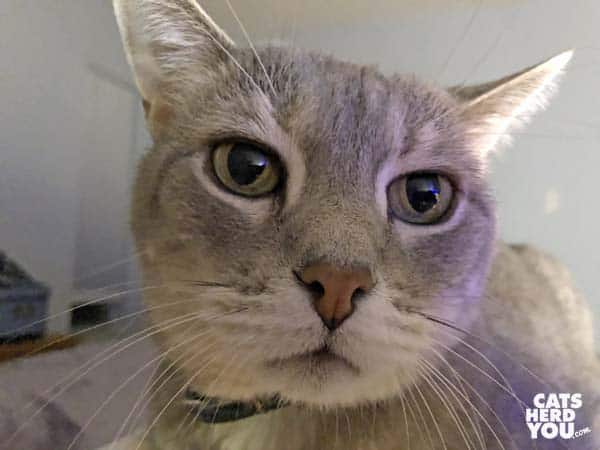
gray tabby cat extreme closeup

Once the lights are out, it’s time for Ashton to take up her spot on the bed between the head peep and the edge of the bed. This is Ashton’s spot, and only Pierre tries to take it, and only occasionally. When he does, Ashton huffs a big sigh and squeezes in next to him.

Pierre’s self-assigned spot on the bed is the other pillow. It’s the softest place on the bed, so it makes sense that a senior cat like him deserves such a comfy place to sleep.

Cupcake usually comes to bed later during the night and sleeps between the pillows. The head peep knows when this happens, because Pierre hisses at her for being so close to him, but Cupcake does it anyhow. Once she is cozy between the pillows, Cupcake likes to stretch out and often sticks her feet into the head peep’s face as she is sleeping.

Litter Box Trips

For many years, the manpeep got up at irregular hours. This means that anyone getting up at any hour of the night might mean breakfast, and we don’t want to miss out.

The head peep lets us know that she is going to the human litter box and not getting up to feed us by not turning on the light when she leaves the room. If she turns on the light for any reason, we know it must be time for breakfast.
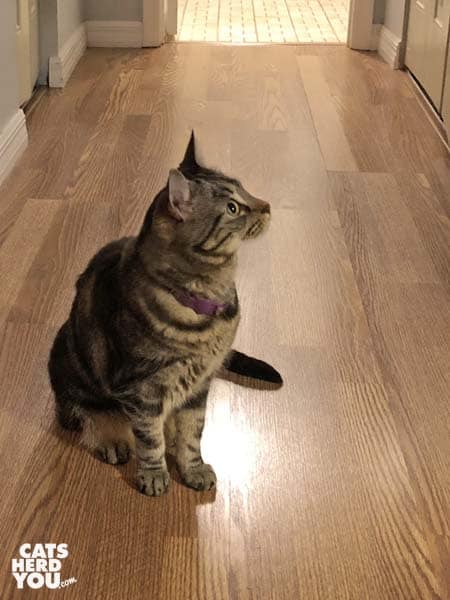
one-eyed brown tabby cat looks upward

The Alarm

Our humans get up at early hours, so they have alarms. When the alarm goes off, we all run into the manpeep’s room to be sure he wakes up. Cupcake comes running back to help make the bed, then she goes back to supervise the manpeep, since he usually dishes out our breakfast.

Is your bedtime routine complicated, too?

Share Share on email
Email
Share on twitter
Twitter
Share on facebook
Facebook
Share on pinterest
Pinterest
Share on google
Google
Share on tumblr
Tumblr
Share on linkedin
Linkedin

February 28, 2018 Filed Under: Cats Tagged With: Ashton, Cupcake, Newton, Pierre 14 Comments

Helping Make the Bed

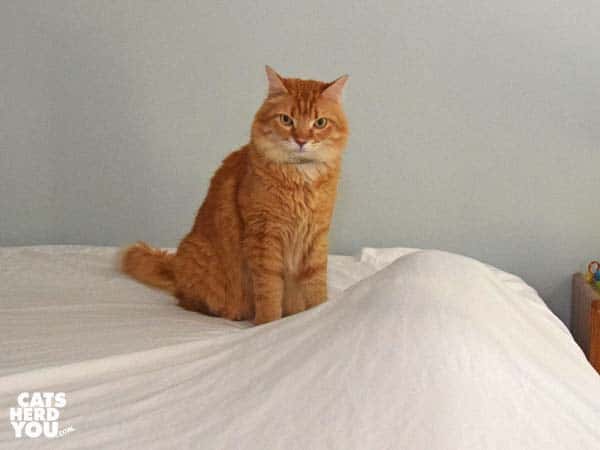
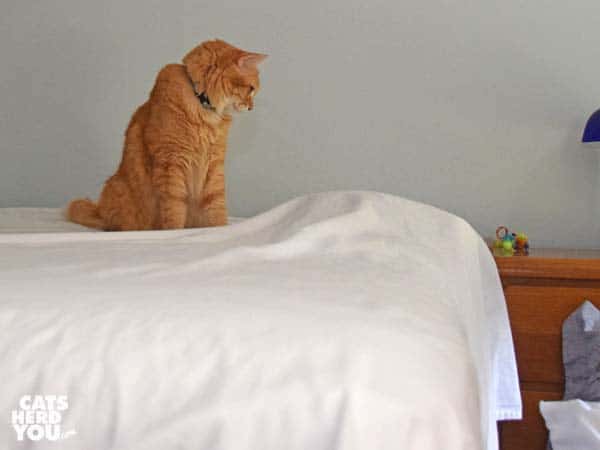
Newton: Humans do a lot of things we can’t help with. We can’t open cat food cans because we don’t have thumbs. I keep hoping. But we can help make the bed.

orange medium-hair tabby cat plays with object under sheets

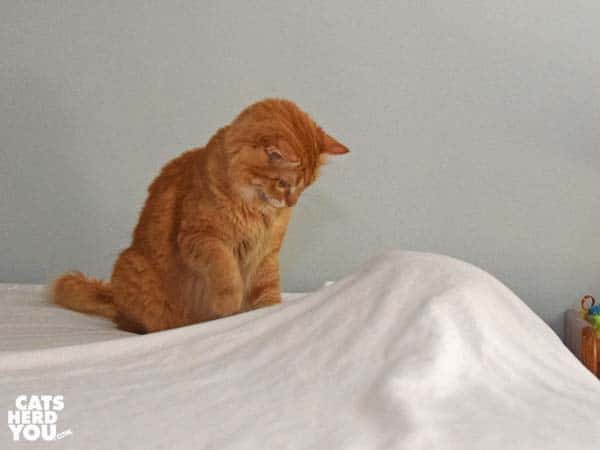
Newton: This sheet is not smooth. Humans really like their sheets smooth, so you have to do something about the lumps.

orange medium-hair tabby cat plays with object under sheets

Newton: You can use your paws for this. Just start poking whatever is causing the lumps.

orange medium-hair tabby cat plays with object under sheets

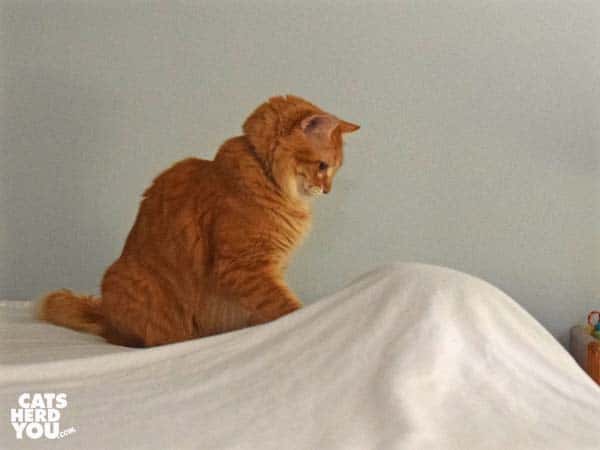
Newton: Poke those lumps really hard.

Lump: HEY!

orange medium-hair tabby cat plays with object under sheets

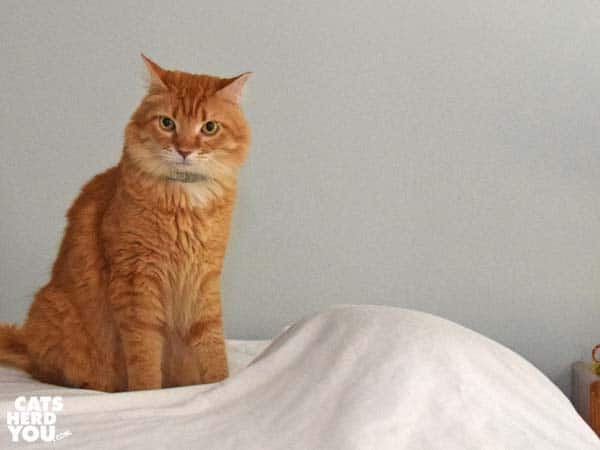
Newton: Did you hear that?

orange medium-hair tabby cat looks at object under sheets

Newton: If you do this right, the lump will move right off the bed. There it goes.

orange medium-hair tabby cat plays with object under sheets

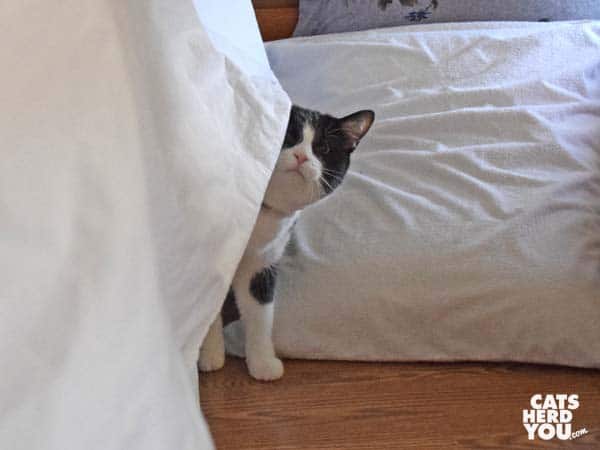
Cupcake: Who are you calling a lump, Mr. Newton?

black and white tuxedo cat looks out from under edge of sheet

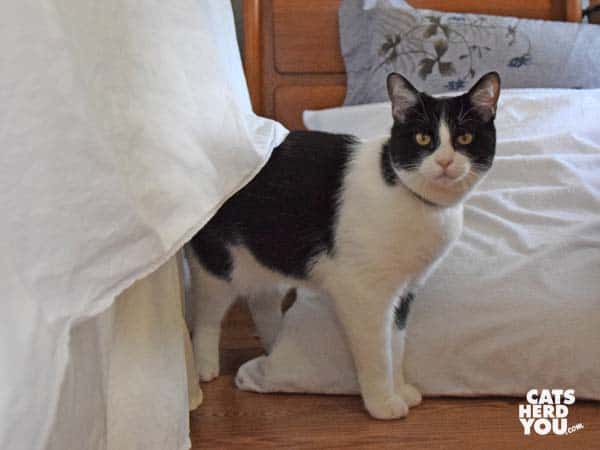
Cupcake: I was helping make the bed from the inside.

black and white tuxedo cat comes out from under sheet

Share Share on email
Email
Share on twitter
Twitter
Share on facebook
Facebook
Share on pinterest
Pinterest
Share on google
Google
Share on tumblr
Tumblr
Share on linkedin
Linkedin

February 26, 2018 Filed Under: Cats Tagged With: Cupcake, Newton 18 Comments

Professionals and Uncooperative Cats

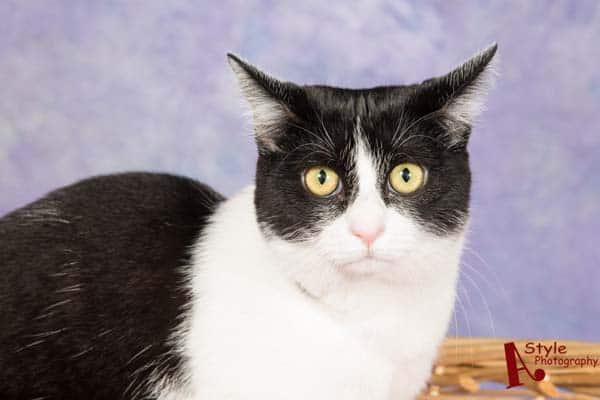
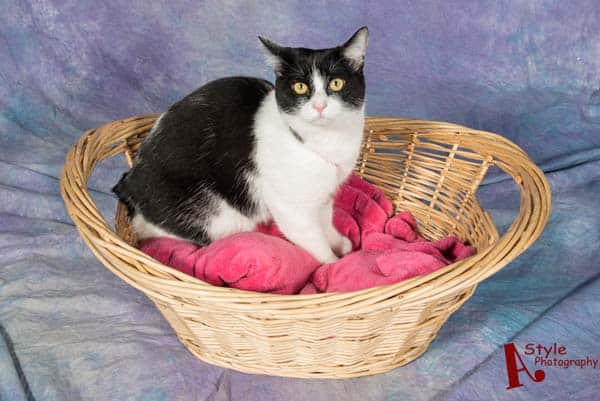
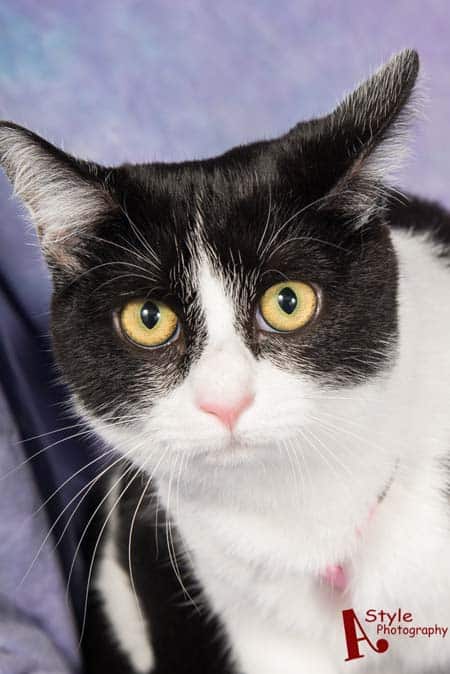
Cupcake recently went for her first professional photo shoot. I made the mistake of thinking that since she is good at handling new situations, a photo shoot would be no problem. She wasn’t quite convinced about the whole process.

black and white tuxedo cat looks unhappy

The photo shoot was set up in an empty storefront next door to the local cat cafe. Who knows how many cats Cupcake smelled nearby but couldn’t see.

On top of that, I kept trying to get her to sit in the props provided by the photographer. Those props were usually used by dogs, who are most of the photographer’s clients. The props had been used by many dogs in a big photo shoot the previous day. Cupcake didn’t like being asked to sit in a basket that smelled like strange animals in a strange-smelling place.

black and white tuxedo cat looks wary

She spent most of the photo shoot on the alert for the other animals to appear. I suspect she would have done better if she could have seen them the way she does other dogs at the coffee shop.

black and white tuxedo cat looks wary

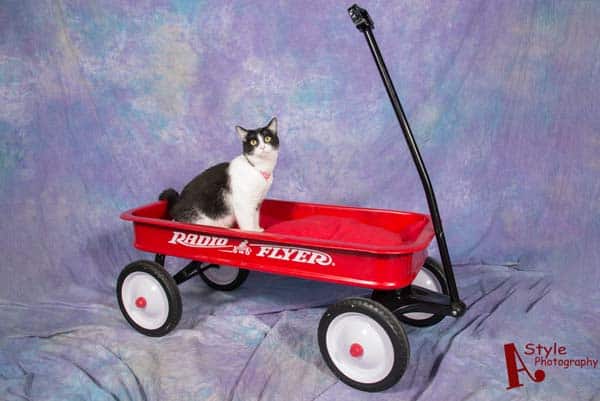
Some of the props seemed to be less offensive to Cupcake’s sensitive nose than others. This might have had to do with the material they are made of. Metal is less porous and would retain less odor than a wicker basket.

black and white tuxedo cat sits in red wagon

Cupcake eventually relaxed a little bit. She didn’t relax as much as she does when she is in a familiar location, but she relaxed enough to at least look like a cat who didn’t think she was being stalked by unseen creatures.

black and white tuxedo cat looks into camera

Cupcake was a good sport about the whole thing, though. As soon as she was allowed to step off of the photo backdrop, she gave me a fist bump. The photographer had never seen a cat do that before! She’s still a star, even if her best moments aren’t captured on camera.

Share Share on email
Email
Share on twitter
Twitter
Share on facebook
Facebook
Share on pinterest
Pinterest
Share on google
Google
Share on tumblr
Tumblr
Share on linkedin
Linkedin

February 23, 2018 Filed Under: Cats Tagged With: Cupcake 19 Comments

Avoiding Permethrin Poisoning in Cats

When I was a little girl, my family had a cat named Suki. I loved the animal shelter more than I did visiting the zoo, and I picked Suki out myself.

cats sleep together on sofa

Suki (left) and Ming (right), the first cats of my childhood.  Photo courtesy Hank Weisman.

Back in the 80s, we didn’t have spot-on flea treatments or any of the other advances in flea control we do today. What we had were flea collars and flea dips you had to bathe your dog or cat in. We also had whole-house foggers that would spew chemicals into the furthest corners of your home, hoping to kill off all of the fleas.

Living in north Florida, we didn’t have the kind of harsh winter that killed off all the fleas like you get in some parts of the country, so fleas were a real problem. When Suki and our dog at the time had a persistent flea infestation, they were both subjected to frequently repeated flea dips to try to get it under control.

One Sunday morning when I was eleven years old, Suki threw up her breakfast. That’s not so unusual for a cat. But what was unusual was that a while later she started convulsing and wouldn’t stop. It went on and on, and it was terrible.

My mother sent my sister and me off to Sunday school with a carpool ride, and she went to the vet. I couldn’t concentrate on anything anyone was saying that morning. I just wanted to know how my beloved cat was. Suki never came home, and I never saw her again even to say goodbye.

Fast forward 30 years or so, and I read a description of permethrin poisoning in cats from flea products. It brought the awful scene from that Sunday morning flooding back. I had the sinking realization permethrin, found in flea dips, had killed Suki.

Permethrin Toxicity

Many flea solutions contain the pyrethrins, an insecticide with an active ingredient permethrin.  This is a synthetic form of a naturally occurring extract from the Tanacetum cinerariifolium flower, part of the chrysanthemum family.

Tanacetum cinerariifolium flower. Image courtesy Wikimedia Commons.

Tanacetum cinerariifolium flower. Image courtesy Wikimedia Commons.

But instead of being a flower, permethrin is a neurotoxicant. It kills fleas by over-exciting their nerves.

Unfortunately, cats are especially sensitive to permeterhins because they can’t metabolize them quickly enough. As a result, permethrin is the most common cause of poisoning of cats in the US. They can cause neurological symptoms like tremors, seizures, and hypersalivation. In some cases, they can even cause death.

Permethrin has been eliminated from most products labeled for cats, though you may still find it today as an ingredient in flea dips labeled for use for both cats and dogs. Products are allowed to be labeled for use in cats when they contain low levels of permethrin. To be safe, always use a product specifically labeled as safe for cats, and avoid pyrethrin and permethrin ingredients.

Cats can be exposed to permethrin by being given a flea product labeled for dogs, or by spending time in close contact with a dog who has had a topical flea product applied. They can also be exposed to it when it is used in insectisides for the garden.

There is no antidote for permethrin/pyrethrin poisoning in cats. Treatment is limited to removing as much of the toxin from the skin as possible to prevent absorbing more and to supportive care.

Questionable Internet Flea Treatment Advice

Today, with the convenience of the internet, it’s easy to reach out to others who love the same things we do for advice and support. As a result, I am often among groups of animal lovers online. Far too often, I see people giving the advice that you can save money on cat flea control by buying a big dog flea medication then splitting the dose up among many cats.

Spot-on flea treamtent. Photo credit: depositphotos/Thamkc

When I see this, I try to warn that it is dangerous, pointing out permethrin poisoning is a risk if you don’t know what is in the dog flea treatment. Answers have ranged from “I’m in rescue and I know what I’m doing” to “I have done it plenty of times and nothing bad has ever happened.” I don’t want to argue with people on the internet, but I don’t want to stand by and watch cats be killed like my Suki, either.

Recently, I have started leaving Facebook groups when this issue comes up because I don’t have the heart to have the same argument over and over again. Even if the person who asked the question reads my warning, the next person who skims past trying to find a quick answer won’t, and I can’t stand to see the tragic results show up in the group later.

A Safer Flea Treatment Plan

If you need to use a flea product for your cat, consider a bath with a few drops of Dawn dish soap, which is often used on kittens too young for flea chemicals. If you use a chemical flea treatment, make sure it’s a flea product labeled for cats and doesn’t contain permethrin. If you are at all unsure about the product, ask your veterinarian about their experience with it.

Also, make sure you know how much your cat weighs. Flea treatment is generally applied by weight, and you can overdose a cat if you guess their weight wrong. Your vet will be happy to set up a weigh-in for your cat if you don’t have an appropriate scale, possibly even at no charge.

Keep your cat safe and happy this flea season!


Research and further reading

Journal of the American Veterinary Medical Association, Toxicosis in cats erroneously treated with 45 to 65% permethrin products.
Journal of Feline Medical Surgery, Feline permethrin toxicity: retrospective study of 42 cases.

Share Share on email
Email
Share on twitter
Twitter
Share on facebook
Facebook
Share on pinterest
Pinterest
Share on google
Google
Share on tumblr
Tumblr
Share on linkedin
Linkedin

February 21, 2018 Filed Under: Health 18 Comments

  • « Previous Page
  • 1
  • …
  • 37
  • 38
  • 39
  • 40
  • 41
  • …
  • 494
  • Next Page »

Read Ashton’s Story in Rescued, Volume 2

These pawtographed books support Candy's Cats, who work tirelessly to find homes for cats in Florida.

Rescued, Volume 2: The Healing Stories of 12 Cats, Through Their Eyes. Proceeds from authographed copies benefit Candy's Cats.


Outside the US, contact us for shipping to your location.

Read Us by Email

Don't miss a thing! Cats delivered to your email.

Privacy Policy


Archives

All Rights Reserved

Articles and images on this site may not be reproduced in whole or in part without written consent. Please contact me if you are interested in reprinting or in having me write something unique for you.

Disclaimer

There are no veterinarians here. All health-related posts are the result of research and observation, but educational information is not a substitute for visiting your veterinarian. Do not self-diagnose your cat. For more information, see our disclaimer.

Policies

Disclosure Statement
Privacy Policy
Commenting Policy

Copyright © 2026 · Sometimes Cats Herd You · All Rights Reserved