
A friend of the head peep who never had cats before said her husband had fallen in love with the idea of two kittens… but she had no idea what to do for them. Our Kitten 101 posts are part of the process of gathering those thoughts together for our friend so that she has some ideas about things to do for her very first cats. Don’t miss our previous post in the series, Kitten 101: Kitten Proofing Your House.
Basic Kitten Gear
To survive, kittens have to eat, drink, and poop. To do that, they need these things:
Food
You should get quality food for your kitten. Dry is convenient, but we eat canned. Some information that helped make the choice for what our diet would look like is on Dr. Lisa Pierson’s CatInfo site including some great nutritional analysis comparison information.
Water
 Your kitten doesn’t need to drink Evian, just clean, wholesome water. If your tap water is something you would drink yourself, it’s fine for your kitten, too. We once lived somewhere that you could smell the sulfur in the water when the shower ran, and we always drank filtered water while we lived there.
- Try to place the water bowl separate from the food location. We have observed that given water near and far from their food, cats consistently drink from the water source far from their food. Big cats don’t drink downstream from the gazelle they just ate, so that makes sense.

Bowls
Each kitten should have his own food bowl, though water bowls are often shared. You can use fancy or plain bowls, just make sure they are safe. Avoid plastic, since some cats have allergies to plastic and will develop acne from the close contact with the bowl during mealtimes. We use stainless steel bowls for our food, since it’s hypoallergenic. You can find them in the grocery store or pet stores. Our water is served in 1.5 quart anchor hocking mixing/storage bowls, available at the grocery store. Not only are they easy to clean and attractive, the clear color of the bowl helps monitor the water level in the bowl.
Litterbox
- The usual rule of thumb is one litterbox for per cat plus a spare, but with kittens, you can probably combine for one litterbox for a while, as long as it is spacious. Many cats don’t care for covered litterboxes, so consider an open one for better compliance.
- Make sure the litterbox has low enough sides for your small kitten who waited until the last minute to get to the box to scramble over the edge.
- If possible, placing the litterbox on an easily-cleaned surface like tile rather than carpet is preferable so that any accidents are easier to clean up quickly and without a fuss.
- Don’t put the litterbox so far out of the way that a kitten who waited until the last minute to go has to run a marathon to get there.
- You may want to put something in front of the litterbox to collect litter off of litter paws as they exit. A washable mat or rug is an easy solution. If you have an IKEA nearby, their inexpensive bath mats make it possible to have a spare to rotate onto the floor while one is being washed.
Litter
- When you adopt, ask what the kittens are accustomed to using. You may want to start with that and mix in whatever your preference to transition.
- Major types of litter bases include clay, paper, corn, and wheat. Many clumping litters are not recommended for kittens. We use corn-based litter so that we don’t ingest clay or any of the clumping agents added to the litter.
Other Kitten Gear
A kitten has needs beyond input and output, and it’s important to take care of them, too. Rest, enrichment, safety for vet visits, and grooming are all important for your kitten.
 Bed
Bed
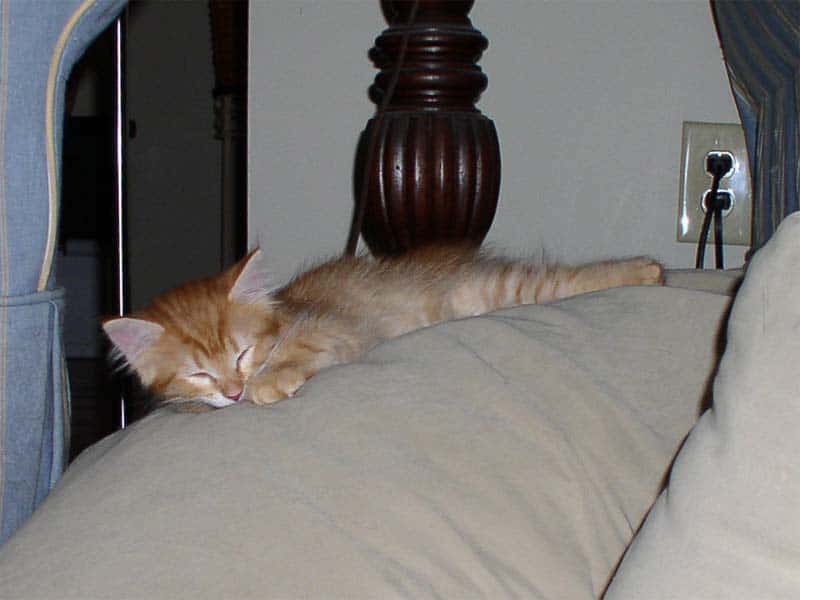
A kitten’s sleeping place should be a “safe spot” where the family agrees there’s no bothering her while she’s in the bed. That allows her to make it her haven. A commercial cat bed isn’t necessary, but your kitten will appreciate a soft, draft-free place to sleep. We never had cat beds until we were adult cats, but always had places to sleep where we felt safe and comfortable.
Scratchers
- Cats need to wear down their claws, and scratching is the natural way they do that. If all they have is your sofa, that’s what they will use. So offering attractive alternatives for scratching is a good idea.
- Scratching posts tall enough for kitty to get a good stretch while scratching are a good idea. Also, some cats prefer scratching horizontal surfaces to scratching vertical ones. You can find scratchers to accommodate that, as well. You may need to try different substrates (sisal, cardboard, etc.) until you find which one your kitty prefers.
- If kitty scratches the sofa arm, you can put a scratcher in a location that blocks access to the preferred location. After kitty transfers her attention to the cat tree, gradually move it back to wherever you would like it to be permanently.
Toys
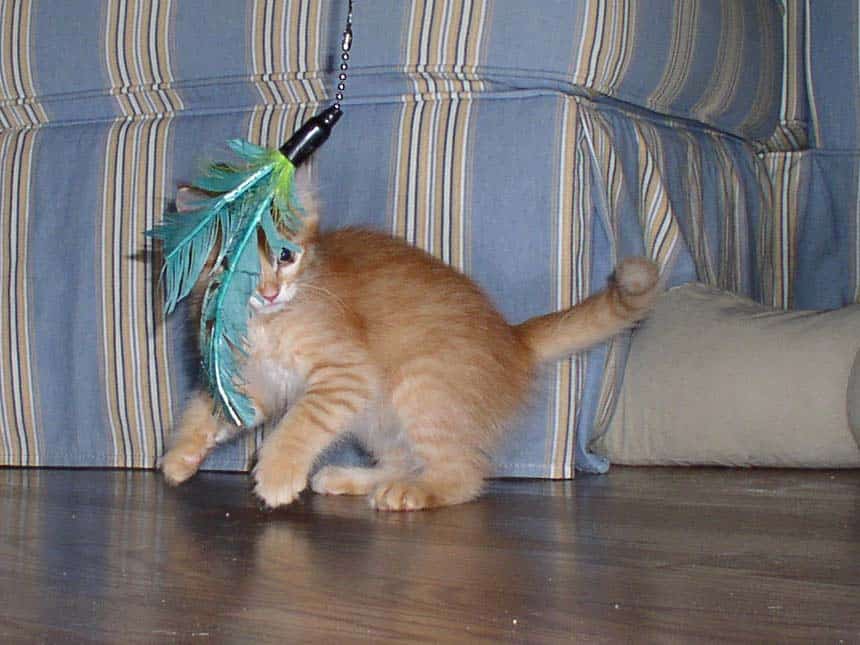
 Look for soft toys with no loose parts. Always examine toys for parts that might come off and be swallowed by a kitten.
- Choose a variety of toys, both for independent and interactive play.
- If you choose any toys with string attached, only let kittens have them for supervised play. Strings or yarn are dangerous if swallowed.
- Kittens usually don’t respond to catnip but may grow into enjoying it after three to six months. Not all cats enjoy catnip, so it’s possible that your kitten never will, so don’t rely on catnip toys.
Cat Carrier
- Always transport your kitten in a carrier when you take her to or from the veterinarian. You don’t want a loose kitten under your pedals in the car or getting wedged under the car seat out of fear.
- It’s fairly easy to get a kitten into any kind of carrier, but as your kitten grows into a cat, you may find that a carrier with a top door is easier to get a reluctant cat into.
We hope this list helps you and your new kitten get off to a good start together!


Great and complete reminder for newbies ! Purrs
Very sound advice! Mommy finds that leaving the carriers out in the open and making it a nice comfy nap spot for the kitty allows the kitty to associate good things with the carrier. She throws treats in there so we are quite happy to get into the carrier. She wasn’t sure how we’ll view the carrier after she had to use it to bring us to the vet. So she was very pleased when she saw how we still enjoyed snoozing in the carrier. 🙂
A great post for anyone who is taking on their first cat(s). We agreed with everything except the carrier being left out – we would just disappear over the fence tops!
Luv Hannah and Lucy xx xx
This is all really great advice! Paws up!
Thanks a lot !
Superb info, and seriously, seem like I got everything 🙂
Happy Me !!!
Great advice. We don’t think you missed a thing!
Great advice. Lots to think about when getting a kitten or two. Have a great day.
That was terrific and should be most helpful for those first time kitty lovers!
Standing ovation you 3 and your peeps are Kitten Whisperers for sure.
hugs madi your bfff
Exactly what a new pawrent would need to have to take care of their new babies!
GREAT article!!! We may save it and refer new adopters here. 🙂
Thanks for the insight! My hoomin says she wants to adopt a kitteh, and this advice will help her a lot. 🙂
Great post! The Catinfo site is one of our favorite resources.
Pip, Smidgen, Minnie, Hollie
Pawsum posty. All newbies shuld wead it. 🙂
Luv ya’
Dezi
Great advice. Litter boxes should also be in a quiet spot that doesn’t have heavy traffic. When TW adopted her first kitty, a feral she found in their back yard, they put her in a cardboard box to take her to the vet. I don’t have to tell you that when they got out the the car, the cat bolted and they never saw it again. A PTU is a must.