Some people think that separation anxiety a problem in dogs but not cats. Cats can suffer from separation anxiety, too.
 Like most other ailments, the signs in cats are more subtle than in dogs. You’re not going to notice that your cat has separation anxiety because she ate all of your sofa cushions while you were gone to work one day. Symptoms of feline separation anxiety include:
- going outside the litter box, possibly even on your bed
- excessive crying or meowing after your departure
- distress as you prepare to depart, such as meowing or hiding as you pick up your house keys
- destructiveness
- overgrooming
- vomiting
- poor appetite
Veterinarians suggest that cats who are anxious about their owners being away be given especially enriching environment to engage her while you’re gone, such as putting your cat’s food in a food dispensing toy to eat while you’re gone, hiding treats around the house for your kitty to “hunt,” or even putting a bird feeder outside the window to add more things to watch from the windowsill. Some cats may enjoy having another cat to keep them company, while others might find this even more stressful.
Also make sure you get plenty of quality time with your cat while you are home. It’s easy to be busy and in front of the computer or TV in the limited time you have before you have to go somewhere, but a ten minute play session just before you leave can wear your kitty out and help her be ready for a nap while you’re gone.
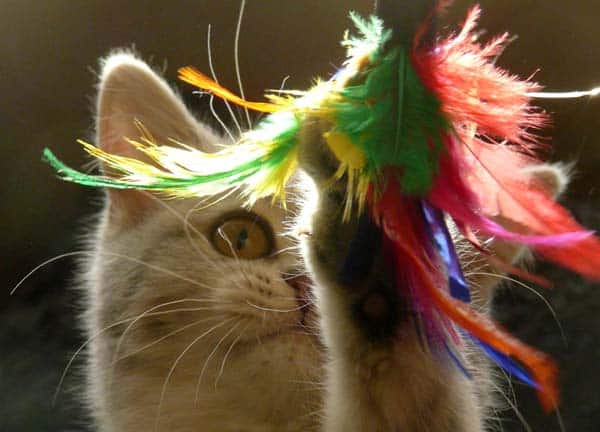 Leave a varying rotation of toys available for your cat to interact with when your kitty does wake from her nap to help keep her interested in that and not missing you quite so much.
If helping the cat to feel more independent through environmental enrichment, you can talk to your veterinarian about anti-anxiety medications for your cat.
Separation anxiety can be a serious problem and shouldn’t be overlooked as a potential cause when a cat is doing something that might otherwise be viewed as misbehaving. With time and patience, you can offset much of its impact on your cat and make her feel better during the time when you’re away from home.
References and further reading:
Journal of the American Veterinary Medical Association, Separation anxiety syndrome in cats: 136 cases (1991-2000)
Ohio State University Indoor Pet Initiative, Separation Anxiety
Dr. Sophia Yin, Separation Anxiety in Cats: When a Smelly Surprise Means Kitty Loves You
Image credit:
Eric Walli on Flickr
Eddy Van 3000 on Flickr