Cats Herd You

Laugh. Learn. Love cats.

  • Home
  • Safety
  • Wellness
  • Rescue
  • Reviews
  • Life With Cats
  • About
  • Media Friendly
  • Contact
You are here: Home / Archives for Health

Ten Myths and Misconceptions about Cats

There are a lot of urban myths and misconceptions about cats. Today, I’m going to talk about ten of the most common ones, and why they aren’t true.

1. Cats always land on their feet

Cats have a righting reflex, and in many cases, they will land on their feet. If a cat can fall far enough, he can usually right himself by twisting in midair. Shorter falls may not give a cat time to perform the necessary acrobatics to land paws-first, and older, arthritic cats who are less supple are less likely to be able to make the necessary moves in time. Additionally, kittens do not have a fully-developed righting reflex until between three and seven weeks of age.

Newton looks skeptical

2. All tortoiseshell cats are female

99.96% of tortoiseshell cats are female. The extremely rare tortoiseshell male cat, considered a genetic mutation, is usually sterile, and finding one is often a newsworthy event, such as a kitten who ended up in a shelter last year.

3. If you’re pregnant, you need to get rid of your cat

Cats are a host for the parasitic disease toxoplasmosis, which can be dangerous for an unborn baby if a woman who has never been exposed becomes infected during pregnancy. Avoiding direct contact with feces in the litter box either by getting someone else to clean the box or by wearing gloves and then washing hands thoroughly afterwards are recommended. The Center for Disease Control (CDC) lists more likely sources of toxplasmosis as undercooked meats and gardening, so be sure to clean all kitchen prep surfaces thoroughly and wear goves while gardening, as well.

4. All cats hate water

Most cats do hate water, but some like it and even seek it out. The Turkish Van breed is nicknamed the “swimming cat” for their love of water.’

5. If a cat scratches your furniture, just get her declawed

Declawing is a painful surgery in which the last bone in each toe is amputated. Cats can have permanent nerve damage, leaving a cat unable to walk on uneven surfaces without pain. This leads to declawed cats refusing to use litterboxes, which is usually even more undesirable than the original furniture scratching. Instead, offer convenient and appropriate alaternative scratching surfaces for your cat and trim her nails if necessary.

6. Cats should have a dish of milk every day

Most cats are lactose intolerant, and cow’s milk contains more lactose and casein than most cats can digest. Feeding milk often results in an upset stomach.

Newton Laughs

Newton laughs and says, “If feed me milk, I’ll make you sorry for it!”

7. A cat eat a diet of fish

Occasional fish may be all right, but fish isn’t a safe primary food source for cats. Some fish contain thaminase, an enzyme that destroys thiamine (vitamin B1), necessary for healthy neurological function in cats. Additionally, a fish-based diet can cause vitamin K deficiency. Many commercially-processed fish-based foods contain a syhtnetic form of vitamin K, menadione, which is banned by the FDA for use in human supplements.

8. Cats are nocturnal

Cats may knock over things in the middle of the night, but so do you when you’re wandering around in the dark! Cats internal clocks tell them to hunt at dusk and just after dawn, the times when they are most likely to find prey.

9. Cats will kill your baby

This urban myth usually takes the form of a jealous cat smothering the baby or sucking the baby’s breath. Cats love to snuggle in warm, cozy places, and people like to put their babies in cozy cribs. Is there any wonder cats try to join the baby in the best napping spot in the house? The myths about cats killing babies have been around for hundreds of years, long before Sudden Infant Death Syndrome (SIDS)  was a recognized cause of death for babies, usually occurring to babies in their cribs. Cats were probably blamed for some of those deaths.

10. Cats are so close to their wild ancestors they can survive in the wild

After being raised in a household and never being taught to hunt for her own meals, your cat can’t provide for herself. Cats left to fend for themselves when their family moves on are at high risk of starvation or being killed by predators. Your cat is part of your family, so include her in your moving plans!

Share Share on email
Email
Share on twitter
Twitter
Share on facebook
Facebook
Share on pinterest
Pinterest
Share on google
Google
Share on tumblr
Tumblr
Share on linkedin
Linkedin

May 14, 2015 Filed Under: Health Tagged With: Newton 26 Comments

Canine Influenza: A Concern for Cats

Families with dogs in Chicago and other parts of the midwest have been taking precautions against an outbreak of canine influenza that has sickened over 1000 dogs. Veterinarians were treating it on the assumption that the flu was caused by a subtype of the H3N8 virus, which first emerged in greyhounds in the US in 2004. Cornell University has announced that they had determined that the outbreak was actually caused by a virus closely related to Asian strains of influenza A H3N2 viruses, currently in wide circulation in southern Chinese and South Korean dog populations.

Should Cat Guardians Care About Canine Influenza?

kittens and border collieBy now, you’re probably checking to make sure you’re on the right blog. Why would you be reading about the dog flu where you normally read only about cats? The H3N2 virus isn’t exclusive to dogs; it can be transmitted between species to cats.

At the beginning of 2010, cats in an animal shelter in Seoul, South Korea caught the H3N2 canine influenza virus from dogs in the shelter who were also ill with the virus. In this first known outbreak of the disease in cats, 100% of the cats in the shelter became ill, and 40% did not survive.

A subsequent study published by the International Society for Influenza and other Respiratory Virus Diseases verified that cats can acquire the H3N2 virus both from dogs and from other cats. Importantly, the study also verified that transmission of the virus doesn’t require direct contact. Cats in the study acquires the virus by respiratory droplet (airborne) transmission, too. Once infected, cats shed the virus, making them contagious, for up to seven days.

Most reported clinical cases of H3N2 virus have been severe, but antibodies have been found in significant numbers of healthy dogs and cats, which suggests that some animals have milder illnesses. Symptoms in cats include elevated temperatures, lethargy, and respiratory signs including nasal discharge, conjunctivitis and abdominal breathing.

Precautions You Can Take

The American Veterinary Medical Association (AVMA) recommends that sick dogs or those showing signs of respiratory illness be isolated from other dogs. Because dogs are most contagious in the two to four day incubation between exposure and before showing signs of illness, they also recommend isolating dogs known to have been exposed to dogs infected with the H3N2 virus from other dogs. Knowing that this can be transmitted to cats, you can take the same precautions and isolate your sick or exposed dogs from cats, as well.

You can help prevent spread of the virus by good hygiene such as hand washing and by through cleaning of shared items such as blankets and bedding. Influenza viruses do not usually survive in the environment beyond 48 hours and are inactivated or killed by commonly use disinfectants.


References and further reading:

Cornell University, Midwest Canine Influenza outbreak caused by new strain of virus
Journal of General Virology, Interspecies transmission of the canine influenza H3N2 virus to domestic cats in South Korea, 2010
International Society for Influenza and other Respiratory Virus Diseases, Inter- and intraspecies transmission of canine influenza virus (H3N2) in dogs, cats, and ferrets
Iowa State University Center for Food Security & Public Health, Canine Influenza
AVMA, Canine Influenza: Pet Owner’s Guide

Share Share on email
Email
Share on twitter
Twitter
Share on facebook
Facebook
Share on pinterest
Pinterest
Share on google
Google
Share on tumblr
Tumblr
Share on linkedin
Linkedin

April 16, 2015 Filed Under: Health 14 Comments

Heartworms: Not Just for Dogs

April is Heartworm Awareness month. You probably know that dogs can be infected with heartworms, but did you know that cats can get heartworm disease, too?

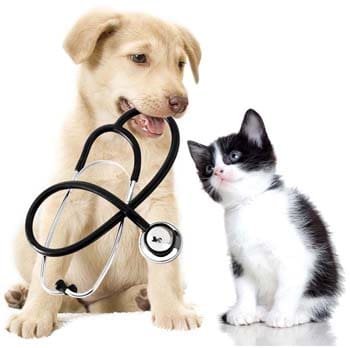
Puppy and kitten with stethescopeHeartworm disease is different in cats than it is in dogs. While both cats and dogs are infected through the bite of a mosquito carrying heartworm larvae, cats typically only get a few worms, while dogs can harbor hundreds of heartworm larvae.

Heartworm in cats is often undetected because most heartworms in cats die before they reach adulthood, and the standard blood tests to diagnose heartworm only detect adult worms.

Some cats with adult heartworms have mild symptoms, such as vomiting not related to mealtimes or trouble breathing that resembles asthma. Because heartworms act on the cardiovascular system, cats can also die suddenly from pulmonary thromoboembolism or develop congestive heart failure.

How common is feline heartworm infection? In areas of the country where heartworm disease is most common, an antigen study found 10% of cats in shelters had been infected with heartworms. Areas of the country where heartworm disease was less common still found 2% of shelter cats carrying antigens indicating heartworm infection.

Is your area of the country one where there is elevated heartworm danger? The following map from the American Heartworm Society shows the frequency of reported heartworm infections in 2013.

Heartworm incidence map

Many people think that keeping their cat indoors is enough protection from heartworm, but a study at North Carolina State University found that 25% of heartworm cases occur in indoor-only cats. Mosquitoes get into your house more often than you realize.

Heartworm in cats does not have a good treatment approach, and a single heartworm can have devastating impact on a cat’s health. The approved medication for heartworm in dogs isn’t safe for cats. As a result, it is recommended that preventative treatment be considered for cats living in areas of the country where heartworms are common, especially if they go outdoors. Your veterinarian can advise you whether a monthly preventative treatment is appropriate for your cat.


References:

Journal American Veterinary Medical Association, Heartworm Infection in Cats: 50 cases (1985-1997)
The Merck Veterinary Manual, Overview of Heartworm Disease
Companion Animal Parasite Council, Feline Heartworm
American Heartworm Society

Photo credit: depositphotos/gurinaleksandr

Share Share on email
Email
Share on twitter
Twitter
Share on facebook
Facebook
Share on pinterest
Pinterest
Share on google
Google
Share on tumblr
Tumblr
Share on linkedin
Linkedin

April 9, 2015 Filed Under: Health 13 Comments

Feline Tuberculosis

Every year on March 24th, the world marks World TB Day. While many people are fortunate to only know of tuberculosis only through their required Charles Dickens reading in high school, it’s a disease that impacts humans around the world today… and it infects cats, too.

cats with cattleTuberculosis describes disease where there is a formation of inflammatory nodules, called granulonomas, in the body. Cats are naturally resistant to the organism that causes most tuberculosis in humans, Mycobacterium tuberculosis. However, cats can become infected with tuberculosis with other bacteria, including Mycobacterium microti, which is primarily found in rodents but can be transmitted to cats who hunt them. Cats are also susceptible to another strain of bacteria, Mycobacterium bovis. This infection usually comes from consuming unpasteurized cow’s milk, or from infected animals such as deer, badgers, ferrets, dogs, and other cats.

Most tuberculosis infections of cats have been reported in the UK, but the disease has been seen in cats other places, too.

cat and mouseSymptoms of TB in cats include coughing, wheezing, and/or weight loss. TB can also cause lumps or abscesses in cats, or bite wounds may fail to heal. These clinical signs of infection may look like other infections, so it requires laboratory testing to identify the cause as TB.

Just after last year’s World Tuberculosis Day, Public Health England and Animal Health and Veterinary Agency announced the first documented case of cat-to-human transmission of tuberculosis. Two people in England developed tuberculosis after contact with a cat infected with M. bovis, and two more people were diagnosed with latent tuberculosis, meaning they were exposed to TB at some point but did not have active disease. Although there were infected cattle in the area, there were signs that the cats had been infected by bites from local wildlife or by other cats.

In the US, M. bovis is uncommon in cattle, but it is found in white-tailed deer in northeastern Michigan and northern Minnesota, which has infected cattle herds in the same range. Raccoons and opossums in the area have also tested positive for tuberculosis as a result. Outdoor cats in the area could come into contact with wildlife exposed to TB, so be safe and be sure not to feed cats unpasteurized milk from herds which may be infected.


References:

International Cat Care, Mycobacterial diseases in cats – tuberculosis
Veterinary Record, Feline tuberculosis caused by Mycobacterium bovis
The Veterinary Record, Unusual cluster of Mycobacterium bovis infection in cats
Journal of Wildlife Diseases, Epizootiloogic Survey of Mycobacterium Bovis in Wildlife and Farm Environments in Northern Michigan
Animal Health and Veterinary Laboratories Agency/Public Health England, Bovine Tuberculosis in domestic pets

Image credits:

Barn cats – depositphotos/modfos
Cat and mouse – depositphotos/AGorohov

Share Share on email
Email
Share on twitter
Twitter
Share on facebook
Facebook
Share on pinterest
Pinterest
Share on google
Google
Share on tumblr
Tumblr
Share on linkedin
Linkedin

March 24, 2015 Filed Under: Health 20 Comments

  • « Previous Page
  • 1
  • …
  • 13
  • 14
  • 15
  • 16
  • 17
  • 18
  • Next Page »

Read Ashton’s Story in Rescued, Volume 2

These pawtographed books support Candy's Cats, who work tirelessly to find homes for cats in Florida.

Rescued, Volume 2: The Healing Stories of 12 Cats, Through Their Eyes. Proceeds from authographed copies benefit Candy's Cats.


Outside the US, contact us for shipping to your location.

Read Us by Email

Don't miss a thing! Cats delivered to your email.

Privacy Policy


Archives

All Rights Reserved

Articles and images on this site may not be reproduced in whole or in part without written consent. Please contact me if you are interested in reprinting or in having me write something unique for you.

Disclaimer

There are no veterinarians here. All health-related posts are the result of research and observation, but educational information is not a substitute for visiting your veterinarian. Do not self-diagnose your cat. For more information, see our disclaimer.

Policies

Disclosure Statement
Privacy Policy
Commenting Policy

Copyright © 2026 · Sometimes Cats Herd You · All Rights Reserved