Every August 15 is National Check the Chip Day. This is a great reminder to all of us that getting your cat microchipped isn’t the only step in the process in giving her a much better chance of getting home.
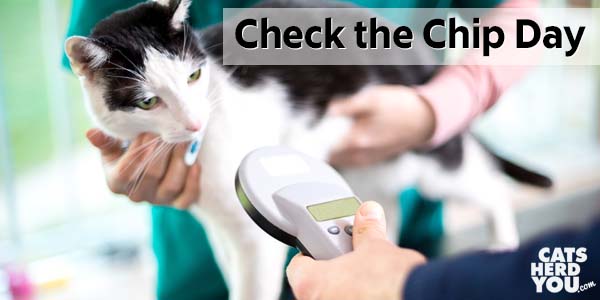
Cats have a 20 times higher chance of being returned to their owners after entering an animal shelter if they are microchipped, but just having the microchip isn’t enough. That chip must be readable and the information must be up to date so the call about your kitty can find you. That’s what Check the Chip Day reminds you about.
First Step: Get Chipped
If your kitty isn’t already microchipped, don’t worry, it’s a simple procedure that can be done at your veterinarian’s office. Reduced-cost and sometimes even free microchips are often available at events in your community.

Microchips are a little larger than a grain of rice, and they are implanted under the skin with a large-gauge needle, like getting a vaccination.
Second Step: Get Registered and Keep Contact Information Current
Register your microchip, and keep it up to date if your contact information changes. Sometimes the veterinarian or organization who chips your cat will register your cat for you, but it’s best to follow up and make sure the paperwork got to the chip registry if you aren’t handling it yourself. If you move to a new address or get a new phone number, don’t just tell your friends. Tell the microchip registry, too.

This is important because one of the leading causes of microchipped pets not being able to get home is not being able to find the current contact information for the pet’s home. If you get a microchip implanted in your kitty and then move across the country, your old vet who implanted it may lose touch with you. If your microchip isn’t registered, the last person the microchip company knew had the chip was your old vet, and a call from an animal shelter trying to get your cat home can’t find you. So keep your contact information up to date with the chip registry to be found when your cat needs you most.
Third Step: Check The Chip
Check the chip! Microchips are implanted between the shoulder blades. When Ashton was a bony, little kitten, you could feel the chip, about the size of a big grain of rice, if you scritched her shoulders just right, just past the end of her neck at her shoulders.
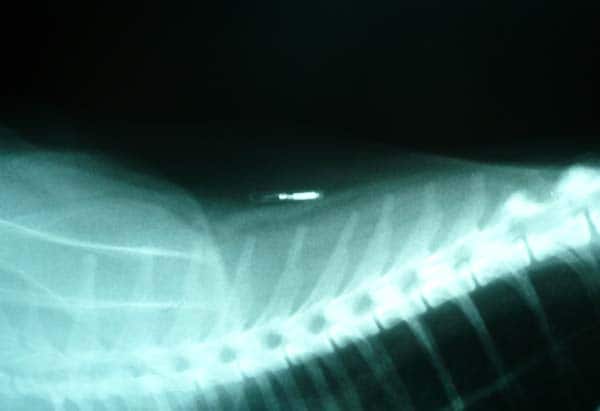
In rare cases, a microchip can migrate. Pierre’s chip has migrated about two inches so you can feel it when you rub his shoulder blade. This is unusual enough that when our vet felt it, he called in some vet techs to feel Pierre’s chip so that they would recognize a migrated chip if they felt one.

In rare cases, a microchip can migrate. this doesn’t hurt your cat or dog, but it does mean that if someone passes a microchip scanner over your pet’s shoulders, it may not be be energized by the scanner’s electromagnetic field. This can lead to the microchip not being detected. To be sure this hasn’t happened, ask your veterinarian to scan for your cat’s chip as a part of their routine veterinary exam.
References and further reading:
OSU Research News, Microchips Result in High Rate of Return of Shelter Animals to Owners
AVMA, Microchipping of Animals
Photo Credits:
depositphotos/vetkit
depositphotos/fotoluxstudio
Wikimedia Commons/Joel Mills
depositphotos/ivonnewierink