Whether you are planning on trick-or-treating for the holiday or having a party with friends, take a few extra minutes to plan for your cat’s safety for Halloween.


Laugh. Learn. Love cats.

We’re bringing back a post from last year because it’s relevant again now. The National Prescription Drug Take-Back Day is coming this weekend, and we want to be sure you’re ready. So dig out those leftover pills you could never get into your hard to pill cat. There’s a safe way to dispose of them near you! You can find locations that will be accepting prescription drugs, no questions asked, on Saturday, September 26th by checking the National Take Back Initiative Collection Site Search or by calling 1-800-882-9539.
There are a lot of things you shouldn’t just throw away.

Flushing your unused medications down the toilet or drain is a bad idea. The US Geological Survey has already found levels of drugs such as antibiotics, hormones, and contraceptives in 80% of the rivers and streams tested in part of a nationwide study. Additional studies have shown that fish and other wildlife can be adversely affected by medications, even when the medications are expired.
Instead of flushing medications, check to see if there are drug take-back events in your area one of the following ways:
If there aren’t any drug take-back events in your area, you can purchase special postage-paid packages from your local pharmacy that send medications back to a medical waste company. Some medications are ineligible for this program so read the fine print before you purchase.
The same guidelines can be used for disposal of human medications, though your veterinarian is unlikely to be willing to take back unused human medication. Keeping our groundwater safe is everybody’s responsibility!
Reference and further reading
US Environmental Protection Agency, Pharmaceuticals and Personal Care Products
US Geological Survey, Pharmaceuticals, Hormones, and Other Organic Wastewater Contaminants in U.S. Streams
US Department of Justice, National Take-Back Initiative
A survey conducted by Lake Research Partners and commissioned by the ASPCA reveals that more than one-third (35 percent) of cat and dog owners don’t have a disaster preparedness plan in place. Do you have a plan? If not, now is a great time to work on one. September is National Preparedness Month, when FEMA encourages citizens to take action by making an emergency plan with their families and their pets.
When a disaster strikes, you may not have time to gather up everything you need for your pets. A basic emergency kit ensures everything is in one place if you need to evacuate or that you have it on hand while stores are closed while you shelter in place. Collect the following items in a large bin or even a five-gallon bucket for easy storage:

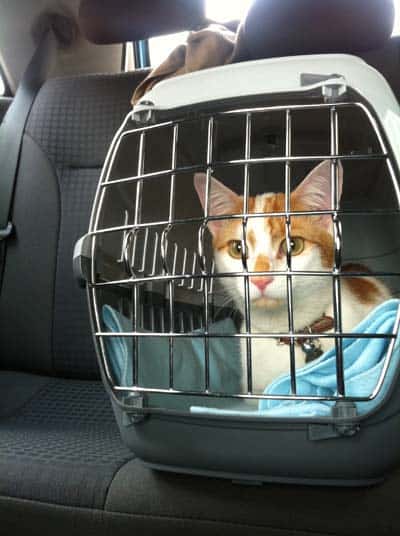 If you do need to evacuate due to disaster, where will you go? Check with your local emergency management agency to see if your local evacuation centers make provisions for pets.
If you need to leave your home in case of disaster, can you and your cat visit a friend or family member in another state? You can even be each other’s evacuation plan!
Keep in mind that if you need to go to a hotel or motel, many aren’t pet friendly. You can check on options at Go Pet Friendly so that you have an idea of places that might accept your four-legged family members.
Eight in ten internet users look online for health information. When it comes to advice about your cat’s health, you’re looking for reputable sources of information. How can you tell the difference between good and bad information about your cat’s health online?
 Going straight to the scientific sources is a way of getting information about your cat’s health without risking someone adding non-evidence-based information to their articles about it. One of the best sources for veterinary journal articles is PubMed, from the US National Library of Medicine at the National Institutes of Health. When you read full veterinary journal articles, they’re heavy reading, but can provide valuable information you don’t see anywhere else.
In addition to the PubMed, which is a US federal web site, large professional organizations and well-known medical schools are also good sources of feline health information.
Some examples of professional organizations providing information for health and wellness for your cat include:
Look for the site to be a .org (organization) rather than a .com (commercial) site.
Examples of veterinary schools that provide information to the public include:
There are plenty more, but those give you the idea. Look for a .edu on the site’s URL, which indicates it is an educational institution.
 This category of web sites includes everything from well-informed individuals writing for sites, well-intended individuals writing about things they really don’t have enough information about, and quacks. You need to use some critical thinking when approaching web sites in order to decide which is which.
The site you’re reading now actually falls under the category of unreviewed sources of unknown credibility. I’m not a veterinarian or a behaviorist, and I write pieces for Topical Thursdays that might be considered giving advice. How would you decide whether this site or any others are well-informed or might contain non-evidence-based information?
One of the first things to look for when looking for a credibility is determining the source of the information published. What is the primary source?
A few more things to keep in mind while you’re surfing for health information for your cat:
Use some critical thinking while you’re surfing the web for information about your cat’s health to ensure you get the best information to make good decisions for your four-footed friend.
References and Further Reading
Pew Research Center, Health Information is a Popular Pursuit Online
National Institute on Aging, Online Health Information: Can You Trust It?
Integrative Veterinary Care Journal, Digestive Enzymes
Photo Credits
depositphotos/tab62
depositphotos/Kokhanchikov
depositphotos/HASLOO