
Adoption of less-adoptable cats is a cause close to our hearts because Ashton is a less-adoptable cat. So for Flashback Friday, we are bringing back a reminder about Adopt a Less-Adoptable Pet Week.

According to a PetFinder survey, 99% of shelters and rescue organizations have pets they are having difficulty placing in good homes. These “less-adoptable” pets fall into several categories.
Less Adoptable Cat Types
Senior Cats
Many adopters decide against senior cats because they are adopting after losing a previous pet, and they don’t want to imagine that happening again for a very long time. The thought of losing a senior cat to old age in only a few years makes them choose to adopt younger cats. Adopters may also be afraid of senior cats developing expensive medical conditions with their advanced age.
 With the aging of the baby boom generation, a growing number of senior pets who lived their entire lives with a single human find themselves homeless when their human who becomes unable to take care of them due to their own age-related issues or even because of their human’s death. When the remaining family members are unable to care for the cat, frightened, disoriented senior pets don’t appear to be good potential companions and are harder to adopt.
Given time to settle into a new home, seniors can make wonderful, loving companions, great for adopters who want a cat to cuddle with but don’t want to have to wear a young cat out with a lot of exercise and play every day.
Shy Cats
Like the frightened senior pets mentioned above, shy cats don’t warm up to potential adopters when they come to a shelter or rescue organization to look for a new companion. Shy cats don’t “show well,” and their shyness can look like aggression when they are especially afraid at adoption events. The same cat that hisses at a potential adopter when being pulled out of the safety of his cage at an adoption event will come out of his shell after being given more time to warm up to strange humans, but it’s hard for the shy cat to get the chance to let his personality shine.
Shy cats can blossom in foster homes, but it can be hard for a potential adopter to take a shelter’s word that the cat cowering in their litterbox will be friendly and outgoing in their home environment once they have time to adjust to new surroundings.
Special Needs Cats
There are many types of special needs cats, like diabetic cats or cats that need special diets for ongoing conditions. Each of these may worry potential adopters because they aren’t sure if they understand what care the cat will need, even though the extra care is often minimal. Education is key to understanding how much or little care a special need cat will require.
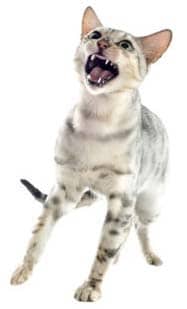 One of the most common conditions that causes cats to be considered special needs is Feline Immunodeficiency Virus (FIV), found commonly among stray cats. While there is a lot of lingering fear and misunderstanding about the transmission of this virus, studies have shown that friendly FIV-positive and negative cats live together without transmitting the disease. While FIV-positive cats should see their vet more promptly at any sign of illness, they can also live long, happy lives with their human and feline families. Still, lingering fear and misunderstanding make these cats harder to adopt.
Imperfect Cats
Many cats are simply imperfect. Even though they need no extra care, they may be missing an eye like our Ashton or a leg like our Cousin Earl. Others might have tattered ears or visible scars. These imperfections are usually from a previous mishap, and the cats simply aren’t as appealing to potential adopters on sight.
These different-looking cats are just as wonderful companions as their two-eyed or four-legged companions, but they are often overlooked because they don’t have as much “curb appeal” as unblemished cats.
Bonded Pairs
Cats who are relinquished to a shelter or rescue together sometimes turn to each other for comfort. It’s no wonder that the rescue organization decides that they must go to a home together so that they can continue to rely on each other for solace during stressful transitions and play together during joyful times. Not everyone wants to adopt two cats, or if they do, they may not want the particular combination of personalities, colors, or other characteristics that the bonded pair represents.

Bonded pairs of cats, with each other to help their confidence, may adapt more quickly to new situations then they would alone, but some adopters still hesitate.
Cats Who Must be “Onlies”
At the other end of the spectrum, cats who must go to homes with no other cats can take longer to adopt because the most likely adopters already have one or more cats. Some only cats also need to be the only pet in the home so they can’t join a household with dogs or other pets, either. This limits their potential pool of adopters and keeps them at the shelter or rescue group longer.
These “only” cats bond closely to their human family members, especially since they have no other feline companions.
Black Cats
People who work in shelters and rescues continue to report that black cats with wonderful personalities take longer to adopt than their more colorful counterparts. Black cats may not show well in the muted light of cages in shelters or may be victims of superstitions about their being unlucky. Anyone who has lived with a black cat can report that they are anything but unlucky, but are great companions with winning personalities.

What Shelters Are Doing to Help
Most shelters work to get their less-adoptable pets extra attention, knowing that they are going to take more families considering them than average before one decides that they have found the perfect companion.
Some shelters and rescues offer programs that help defray the potential costs of medical care that might put people off of adopting seniors or special needs cats. Others offer foster-to-adopt arrangements so that shy cats have time to come out of their shell in a home environment and show their potential adopter what loving companions they can be.
A number of shelters are also working hard to find innovative ways to help seniors keep their less-adoptable pets, serve as long-term foster homes, and adopt senior pets of their own.
Shelter outreach and programs alone won’t help place all of their less-adoptable pets. The next time you’re looking for a new family member, think beyond a kitten to a less-adoptable cat who could be a perfect fit for your family!
References and further reading:
Petfinder, Adopt a Less Adoptable Pet Week
The Veterinary Journal, Transmission of feline immunodeficiency virus (FIV) among cohabiting cats in two cat rescue shelters
Photo credit: depositphotos/cynoclub


I know shelters are working hard to overcome the prejudice many humans have towards certain kitties, but there is still so much work to be done.
It is hard for all those cats that have a little problem. I think the fostering is such a wonderful way to help that problem. If I didn’t have so many, I would love to foster a cat that is having a hard time finding a home.
All cats (and people for that matter!) deserve a safe and loving home.
well said as always….the more we can educate the public, the more lives we can save
Oh do we agree. Keep your eyes and heart open when you go to a shelter. Our first kitty, Milky-way, was just across from the kitten we were actually looking at. Milky-way stuck his paw through the cage, tap my human sis on the shoulder…..the rest is history. For a little guy he had long legs and they continued to grow as he did.
Hugs madi your bfff
It makes me sad that so many good cats need homes. After thinking about what would happen to Bear if something happened to me, I did a lot of research to find ways to make sure he wouldn’t end up in a shelter as a senior, “less adoptable” cat in the future. I wrote a post about it: http://mommakatandherbearcat.blogspot.com/2016/02/what-would-your-cats-life-be-like.html
Everyone should have estate plans that provide for the care of their pets so they don’t end up in shelters (or even abandoned outside) by otherwise well-meaning executors. Bear’s saved my life every day for the past 10 years … the least I can do is ensure a comfortable future for him if something happens to me.
ashton…ewe iz gorgeouz….ewe all wayz haz been, ewe all wayz will be….
gram paw dude waz an onlee……him dee spized other catz witha passion…
N quite frank lee…. eye wood bee labeled a “bullee” ….
eye am glad de food servizz gurl keeped me N dinna send me
bak two de shelterz….. tho eye can never haza “pal” ~~~~~
guess me mom iz me best pal huh
heerz two a yellowtail horse mackerull kinda week oh end two all ~~~~ ♥♥♥
tuna of moon
Great post. Let me count the ways I’m a less-adoptable cat. I wanna be an only cat. When the peeps saw me at the adoption event, I was crouched down in the back of the cage frightened. I have aggression issues. When TW went to adopt a cat for Gramma, she liked a beautiful white cat but the white cat went for her when she put her hand by the cage. She went home with Autumn, a sweet little calico.
Thank you for sharing this! We are proud to say we have many of the types of kitties listed here – senior, special needs, shy, black, an only, and a bonded pair. We couldn’t imagine our household with anything less, and will always look for those at the shelter and adoption events that don’t seem to get all the attention. To us, they have made the best family ever!
Great post ! It’s so important to spread the word and educate people. Purrs
All cats in shelters and rescues deserve a perfect forever home. It’s so sad to think about any cat, less-adoptable or not, that is unable to find that home. We must keep raising awareness and educating the public on adoptions. Thank you for doing just that.
Excellent post, all cats are wonderful companions no matter what color or impairment they have/
I think we all agree–kittens are cute, all right, but bonded cats, black cats and throw-aways are MUCH better. That’s our story, anyway, since all of us (including those who have flown away) was one or the other before we got here.
All kitties deserve a wonderful home and we need to continue raising awareness that every cat is worthy. Mudpie had actually been transferred to VT because she’s been in a NY shelter for awhile. I’ve heard that torties can have a tough time being adopted because some people think they’re ugly…I think that’s the stupidest thing I’ve ever heard!!!
That was such a wonderful post and important message. There aren’t any less adoptable pets though, but there is an abundance of not to bright humans.
Not everyone comes across their best on the first date…
One day.. one day we won’t have the over abundance of cats and the special ones will all get homes
Our mom really wants another black cat. But the inn is full right now. We are pretty sure the reason our sponsored kitty at PAWS, Swizzle, hasn’t found a home is because she needs to be an only. and she is a senior (two strikes). Our local no-kill now has a senior cats for seniors program. Good job at explaining the various kitties who have trouble finding homes. Maybe this will encourage some who wouldn’t have now adopt one of these kitties. XOCK, Lily Olivia, Mauricio, Misty May, Giulietta, Fiona, Astrid, Lisbeth and Calista Jo